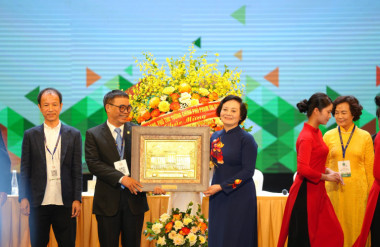
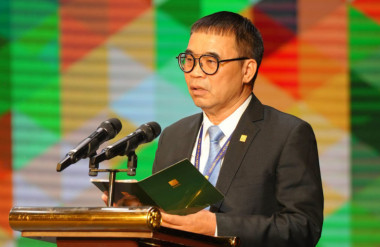
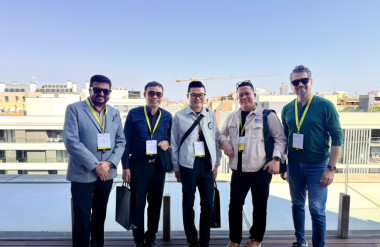
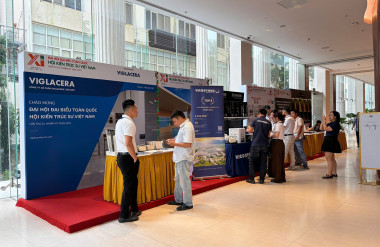
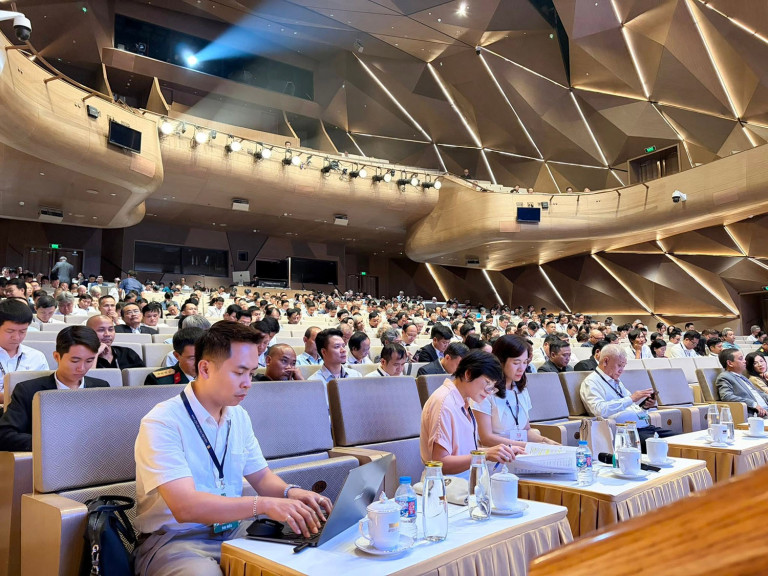
On the morning of September 9, 2026, the 11th National Congress of the Vietnam Association of Architects (VAA), for the 2026 – 2031 term, officially opened its first working day at the Ho Guom Opera House in Hanoi. A total of 492 out of 592 delegates attended the Congress, representing 31 provinces and centrally governed cities across the country.

During the morning session, the Congress approved its agenda and working regulations and heard a report on the verification of delegates’ eligibility. The delegates then nominated and elected the Presidium and Secretariat to oversee the proceedings.
A key highlight of the morning session was the presentation of strategic reports reviewing the achievements of the previous term and setting out orientations for the years ahead.
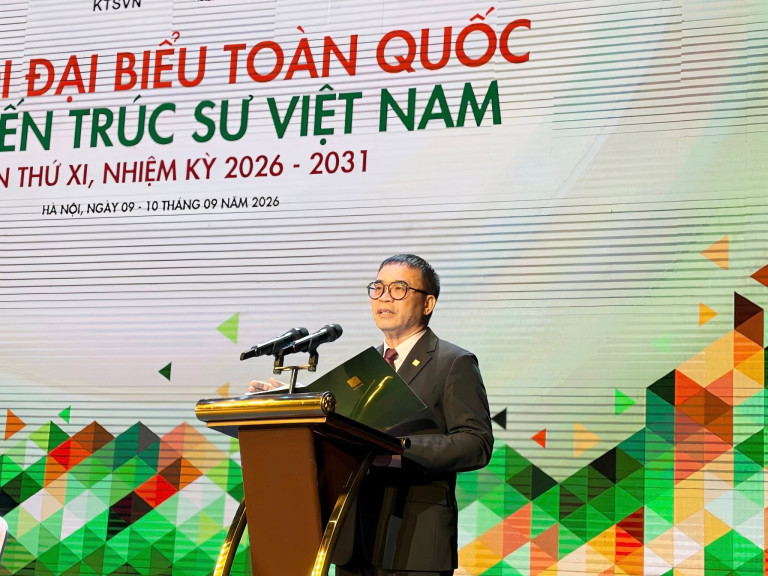
The Political Report emphasized the goal of “building a strong and comprehensive Vietnam Association of Architects; promoting its pioneering role and spirit of innovation and creativity, thereby contributing to the realization of the aspiration to develop an advanced Vietnamese architecture deeply rooted in national cultural identity”.
During the previous term, the Association completed a number of important tasks assigned by the Government, including implementing the Architecture Law, successfully organizing the Vietnam Architecture Exhibition (EXPO 2023), and developing a research and design program featuring 500 models of rural housing.
For the 2026 – 2031 term, the Association aims to promote green and sustainable architecture with a people-centered approach, while accelerating digital transformation and the application of emerging technologies, including AI, BIM and GIS, in urban planning and architectural design.
The review report described the Executive Committee and Standing Committee as a united collective that promoted democracy and proactively fulfilled its responsibilities, particularly in adapting flexibly to the Party and State’s policies on streamlining and restructuring the country’s association system.
While acknowledging the achievements made during the term, the report also candidly identified several shortcomings, including occasional weaknesses in coordination between the central and grassroots levels, as well as the failure of some local Executive Committee members to fully perform their roles.
The report recommended that the new Executive Committee streamline its organizational structure in line with the administrative restructuring from 63 provinces and cities to 34, while prioritizing the selection of committed personnel with strong capacity for effective coordination and connection.
The Congress also heard reports on amendments to the Association’s Charter, the review of the Inspection Committee, and preparations for personnel arrangements. At the close of the morning session, the Congress elected an Election Committee, heard the lists of nominees and candidates as well as the list of candidates recommended by the 10th-term Executive Committee, and proceeded to elect the new Executive Committee.


In the afternoon, delegates attended a forum themed “Architecture and Business: Partners in Building the Future,” held at the Ho Guom Opera House. Meanwhile, the Election Committee worked in a separate room to conduct the vote counting.



According to the agenda, the Congress will enter its formal session tomorrow, September 10, 2026. The event will feature the introduction of the Standing Committee representing the 11th-term Executive Committee, a keynote address by Party and State leaders, and the adoption of the Congress Resolution.
Thuỵ An – TCKT.VN
Photo: Thuy An
© Vietnam Architecture Magazine