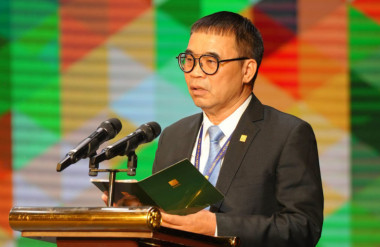
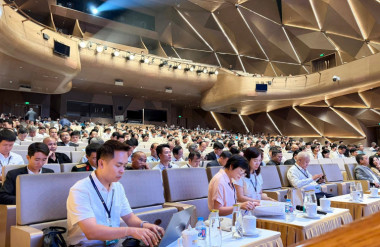
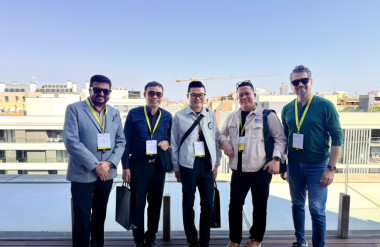
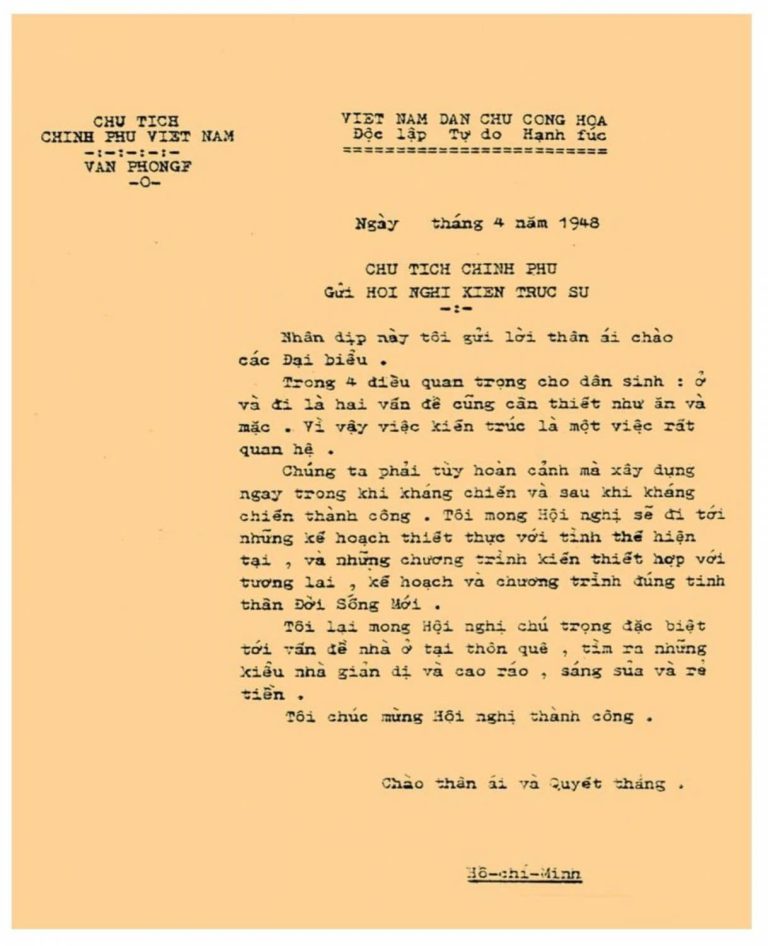
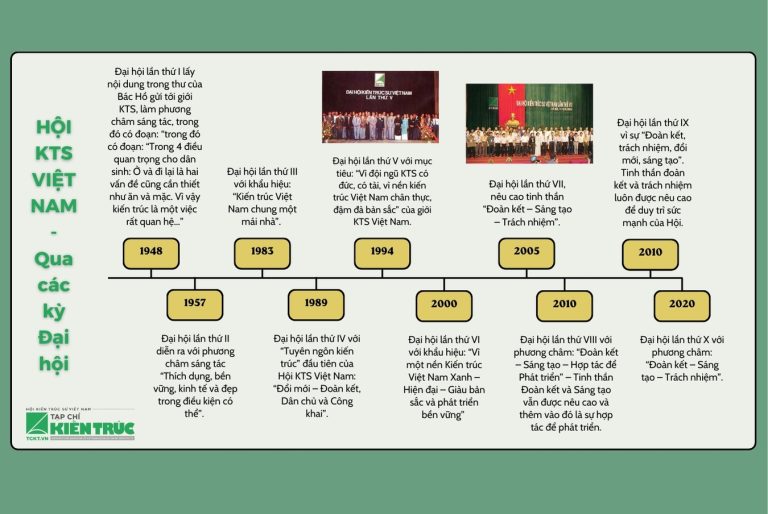
Seventy-seven years have passed since April 27, 1948 – the day President Hồ Chí Minh initiated the founding of the Vietnamese architectural profession and sent a heartfelt message: “…Architecture is a matter of great importance!” Every April, the community of architects and creatives reflects more deeply on the path already taken, drawing inspiration and energy to soar higher. At this moment in time – when the nation is advancing into a new era of innovation, prosperity, and sustainability – such reflections carry even more significance.
Let’s look back at the milestones we’ve passed – and think about what lies ahead!

THE JOURNEYS HAVE PASSES
From independence to the reunification of the country (1945–1975)
From short-term structures like the Independence Rostrum at Ba Đình Square in Hanoi or the Proclamation Tower of the revolutionary government in Saigon (now Ho Chi Minh City), to more permanent and large-scale developments serving the country’s growth – the contributions of architecture were present throughout. In the North: urban planning projects; the creation of institutions such as the Nguyễn Ái Quốc Academy and various universities and schools; the Thái Nguyên Revolutionary Museum and others; Việt-Xô Friendship Hospital and provincial hospitals; hundreds of collective housing blocks in cities; factories and enterprises to meet production demands; parks for recreation; cultural centers for communities… In the South: from wartime bases to urban projects in Saigon–Chợ Lớn and other southern cities. Much of this architecture was rich in local cultural expression, with emerging modern elements tailored to each context. Architecture steadily and tangibly supported public life – even under the conditions of war – affirming its vital and inseparable role in national development.
Interestingly, and fortunately, most of the architecture in this era drew from Vietnam’s cultural roots. Imported designs were adapted, becoming less rigid and more flexible, generally striving to blend into the flow of Vietnamese architecture without losing identity. Numerous local and international researchers have studied this period in depth, so this article will not go into further detail here.
The years of planned economy and government subsidy (1975–1986)
During this period, both North and South Vietnam had just emerged from war. The nation’s architectural focus shifted to systematic urban planning across all regions, especially major cities, and to the restoration or repurposing of existing buildings from the French colonial era or the early Democratic Republic of Vietnam.
New architectural projects were mostly funded by complete aid packages from the Soviet Union and socialist allies. As a result, Eastern European-style modernist architecture appeared throughout the country: mid- and high-rise housing blocks, schools, hospitals, cultural centers, museums, factories – almost all followed similar templates: flat roofs, boxy forms, minimal ornamentation, sometimes mixed with simplified Vietnamese traditional motifs. This wave created an architecture that could be seen as a new “musical score” for global presentation – yet still familiar to the Vietnamese people.
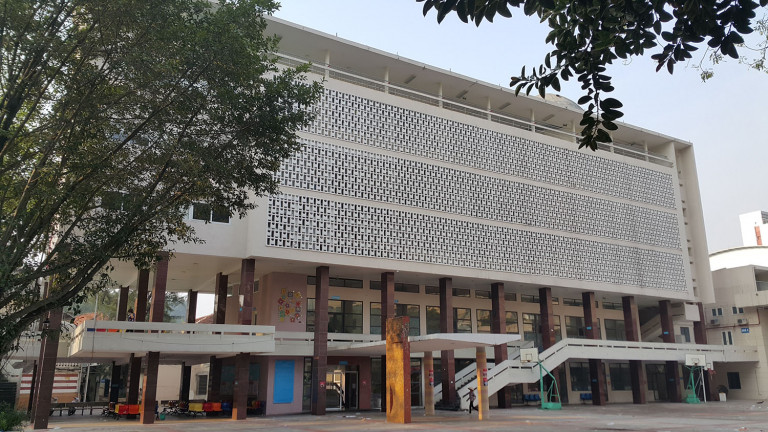
Some architectural works by Vietnamese architects during this time, though limited in number and stylistic diversity, made significant contributions. Notably, creativity was more often linked to cultural identity, with an emphasis on essence rather than imitation. Landmarks such as the Hanoi Children’s Palace, Bắc Sơn Martyrs’ Monument (Tuyên Quang), the Central Circus, Kim Mã Chèo Theatre (Hanoi), and the Hòa Bình Theatre (HCMC) exemplified this approach. These creations illuminated a path of cultural revival and innovation.

The period of Doi Moi and integration (1990–2025)
With the advent of economic reforms, architectural creativity shifted from a “top-down, guided model” to a “market-competition” approach, aligning with global norms. This gave talented Vietnamese architects the chance to showcase their work – but also brought fierce competition from foreign architects with superior technical and artistic expertise. The transition took time – about 5 to 7 years – so it wasn’t until the early 21st century that Vietnamese architecture truly flourished.
International consultancies brought major breakthroughs, especially in executing complex multi-functional developments. Globalization was deeply reflected in these works. At the time, Vietnamese regulatory bodies did not prioritize local cultural values nor mandate them in foreign investment projects. Thus, to some extent, it was large investors who shaped Vietnam’s architectural landscape during this phase. This led to an emphasis on form, technology, and performance, often at the expense of cultural identity, which was loosely addressed. Mediterranean villas and European Renaissance-style castles were enthusiastically transplanted into Vietnam.
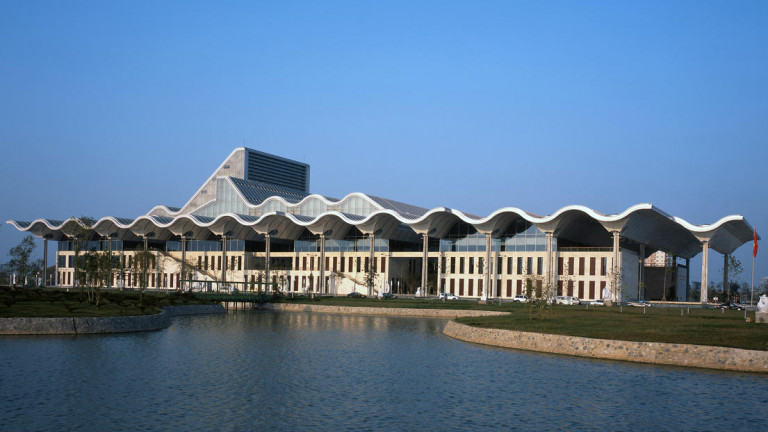
However, modern Western architecture that incorporated Vietnamese spirit to varying degrees also gained traction, particularly in large-scale, publicly funded projects like the National Assembly House, National Convention Center, Vietnam Military History Museum, Binh Dinh Science Center, Bitexco Tower, and Viecombank headquarters in HCMC. These works gave Vietnamese architecture a contemporary face that confidently joined global currents without losing itself.
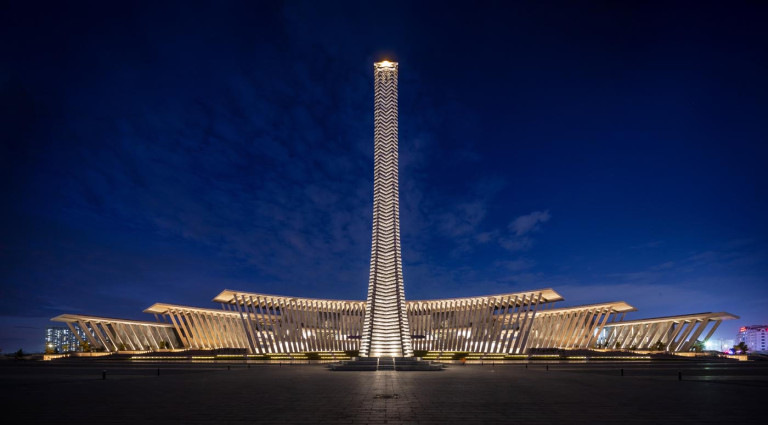
Among Vietnamese architects, success came from blending tradition with modernity, through context-driven design rather than surface mimicry. This approach has gained traction in architectural practice, theory, and critique. In particular, single-family homes and low-rise dwellings have seen great strides with passive energy use, material innovation, and regional aesthetics. Similarly, small-scale public works – community houses, craft village museums, kindergartens, cultural centers, eco-tourism sites – have flourished.
This is evidenced by: the increasing number of international awards for Vietnamese architecture; local communities enthusiastically engaging with architectural works; and visitors from Vietnam and abroad seeking to experience and interact with these spaces.
In the quest for global parity, Vietnamese architects have also delivered outstanding results: high-rise residences meeting global standards; hospitals achieving international medical benchmarks; commercial centers on par with global counterparts; world-class resorts and entertainment zones. These are proof of both technical and aesthetic achievements.

The effective collaboration between international and Vietnamese consultants has also yielded high-quality works. This trend is promising and should be encouraged, as it allows for the integration of advanced technologies with deep cultural identity. Such models are increasingly evident in projects by major conglomerates. In an era of rapid technological advancement, this hybrid approach is accelerating toward limitless development.
Looking back, alongside the joys of contribution, there remain concerns about Vietnamese architecture today.
These include: limited application of architectural theory and criticism in practice due to a lack of actionable solutions and resources; stagnant training in planning, architecture, landscape, interior-exterior design, and theory despite global technological advances; and persistent difficulties in realizing architectural creativity, from design competitions to project execution, due to weak or unclear regulations. Major national programs and large private investments often exclude Vietnamese consultants or assign them secondary roles, despite the global recognition of many Vietnamese architects. The Vietnam Association of Architects, while active in community engagement and creative advocacy, still lacks sufficient scale and authority to lead more effectively.
WHAT FUTURE FOR VIETNAMESE ARCHITECTURE?
Let us envision a future path for Vietnamese architecture, drawing from foundational and influential factors:
- Legal framework – from policies to laws, standards, and regulations – still offers room for refinement, but the basic structure is in place to guide architecture into the future.
- Scientific and technological development will likely be the most influential factor for upcoming architecture. It brings immense opportunities that must be embraced in a timely, sensible way – or we risk being left behind. Yet it also poses the greatest threat to architectural identity and even the livelihood of practicing architects.
- Climate change, with its increasingly unpredictable and devastating impacts, must be considered in every architectural endeavor.
- The changing needs of architecture’s “users” will continue to evolve rapidly with society, including unknowns that remain difficult to forecast.
- Local culture, as a foundation, will continue to be reshaped and refined in line with the spirit of the times and the demands of integration – coexisting and developing through mutual respect and exchange. This will significantly influence architecture.
- Social mechanisms and models must also be rigorously studied to create architecture that is adaptable. Architecture cannot ignore its role as a political expression in any society. Therefore, Vietnamese architecture cannot simply follow the models of the U.S., France, Japan, or Singapore – it must chart its own course.
- With this multi-dimensional perspective, the future of Vietnamese architecture must address a wide range of issues, with architects serving as one link in a larger chain. Key priorities include: integrating local and global cultural elements; applying new technologies; adapting to climate change and natural conditions; addressing human and societal needs; contributing to economic and social balance; and embracing the architect’s responsibility to society and the community.
May Vietnamese architecture continue to become more sustainable, more modern, and more culturally distinct within the global architectural landscape – aiming toward humanistic values and sustainable development!
© Vietnam Architecture Magazine