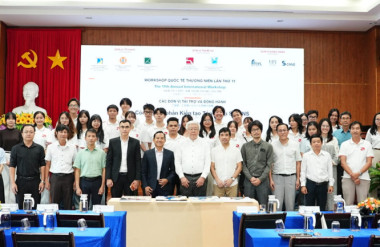
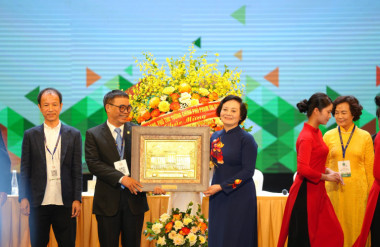
On the morning of August 20, 2026, the “Xóm Đoài” Cultural and Arts Creative Space officially opened at Xóm Cò, Yen Binh 2 Hamlet, Yen Xuan Commune, Hanoi, marking the beginning of a series of activities leading up to the Hanoi Festival of Creative Design 2026.
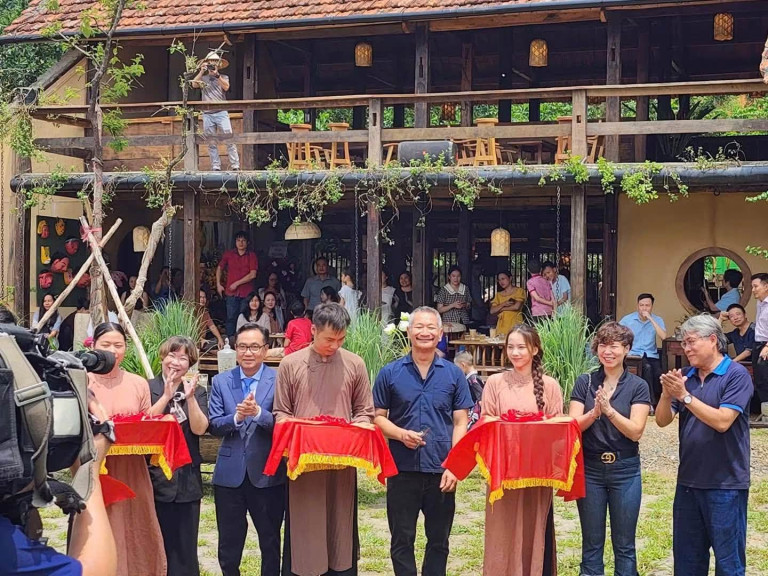
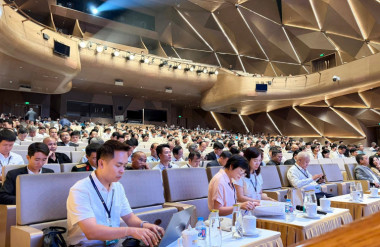
The opening ceremony was attended by representatives of management agencies, scientists, architects, artisans, members of the local community, and those interested in culture, architecture, and heritage.
From traditional architectural fragments to the “Xóm Đoài” creative space
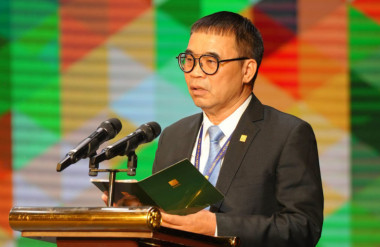
In his opening remarks, Nguyen Van Hai, Chairman of the Hanoi Association of Architects, said “Xóm Đoài” was conceived in response to the rapid transformation of rural architecture amid urbanization.

According to Mr. Hai, the Doai region has long been known for its rich cultural identity and its distinctive heritage of northern Vietnamese village architecture, including wooden houses, gates, roof trusses, carved doors, decorative motifs, and communal spaces. However, rapid urbanization has led to the demolition of many traditional structures, which are being replaced by new buildings. “What is lost is not simply a house or an old gate. We may also lose a part of the community’s collective memory”, Mr. Hai emphasized.
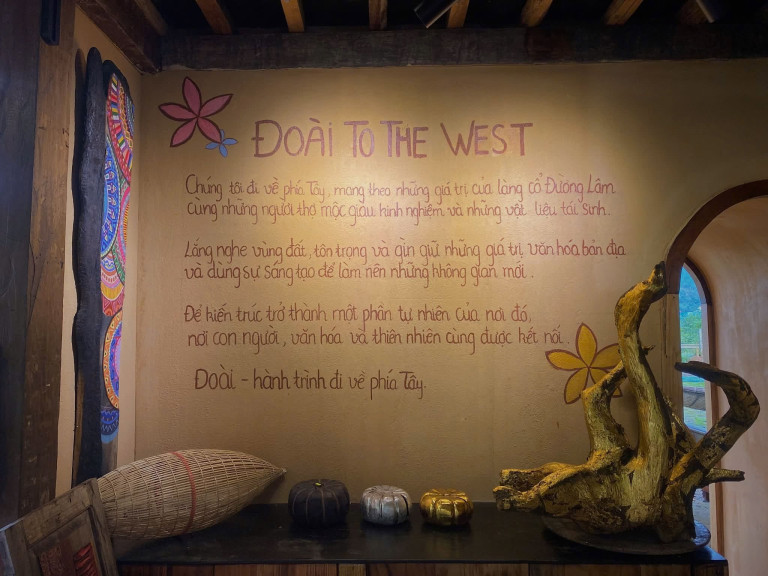
Driven by this concern, over the past several years, Mr. Thang, together with artisans from Duong Lam and a group of artists, has collected, preserved, and restored architectural fragments and structural elements – including beams, columns, walls, and verandas – from traditional houses in northern Vietnamese villages. These elements have been brought together, restored, and reassembled within a new setting, creating connections between heritage, memory, and contemporary creativity.
With a spirit of “listening to the land” and a commitment to respecting and preserving local cultural values, the project team has drawn on creative practices to create new spaces that carry the heritage of Duong Lam Ancient Village, the craftsmanship of traditional carpenters, and the ethos of working with reclaimed materials.
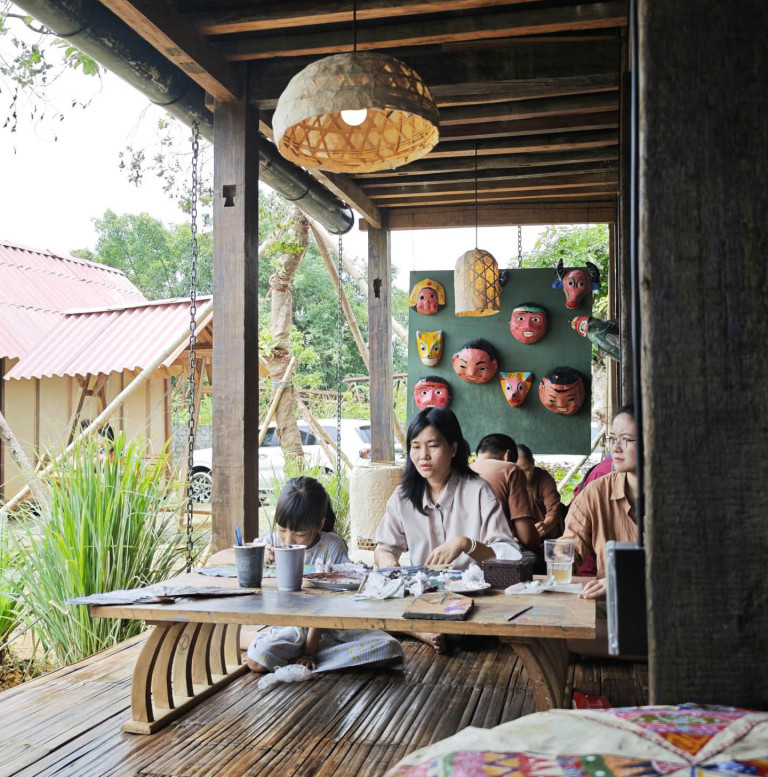
“Xóm Đoài” is not a museum in the traditional sense. Instead, it seeks to become a space where heritage can return to community life. Here, traditional architecture is placed in dialogue with greenery, landscape, and everyday community activities. Children can come to play and learn; young people can discover the values inherited from previous generations; artisans can share stories of carpentry and wood carving; while architects and cultural practitioners can exchange ideas about the future of heritage.
“Preserve heritage, but do not let it stand still. Bring heritage back into everyday life, so that it can continue to create new value”, the Chairman of the Hanoi Association of Architects said. He noted that this also reflects the role architecture and creative design can play in contemporary development. Architecture is not only about creating new structures; it also carries a responsibility to preserve the memory of a place and create spaces where people can connect with one another.
“Xóm Đoài” was also introduced as an initiative driven by businesses, artisans, and members of the community who share an interest in traditional culture. The space is being developed on leased land for the duration of the Festival and will be returned to its original condition once the program concludes.
The project team views this approach as a small-scale experiment in the circular economy and community-led creativity: making use of existing cultural assets, restoring them through human knowledge and craftsmanship, and then introducing them into a new setting where they can continue to generate social value.
Notably, “Xóm Đoài” is located along the route connecting Hoa Lac and Hoa Binh, an area expected to experience rapid urbanization in the coming years. The project team therefore hopes the space will become a cultural and architectural landmark of the Doai region, offering residents and visitors a place to pause, observe, experience, and learn more about the area’s history and culture.
Connecting heritage with the future
The story of “Xóm Đoài” places the preservation of traditional architecture within a broader approach: not everything from the past necessarily needs to be preserved in its original form. Instead, certain distinctive values can be selected, safeguarded, transformed, and given new life in contemporary society.
In the coming period, the space is expected to host cultural and historical experiences, talks, seminars, and educational programs for children and young people. These activities will seek to strengthen connections between the community and architecture, landscape, nature, and heritage.
From a small plot of land, the project team hopes to tell a larger story about how communities can work together to preserve the memory of their homeland – and transform that memory into a source of inspiration for the future.
In his opening remarks, Nguyen Van Hai, representing the project team, expressed his appreciation for the attention and support of local authorities, management agencies, the Hanoi Association of Architects, artisans from Duong Lam, the local community, and supporting partners. He then officially declared the opening of the “Xóm Đoài” Cultural and Arts Creative Space as part of the Hanoi Festival of Creative Design 2026.
The opening marks the beginning of an experimental space where traditional architectural values are not only preserved, but also reconnected with the community, landscape, and creative practices – toward a more dynamic approach to preserving and promoting heritage amid rapid urbanization.
Thuy An – TCKT.VN
© Vietnam Architecture Magazine