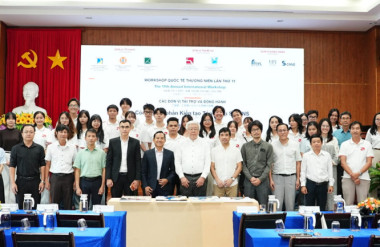
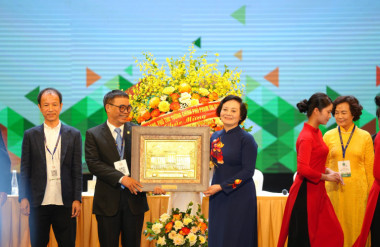
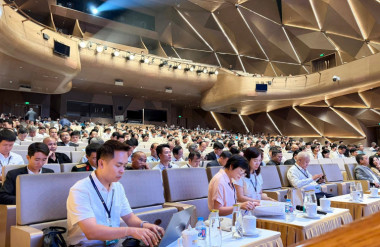
On July 25, in Hanoi, the Vietnam Association for Urban Planning and Development held its 6th National Congress for the 2026 – 2031 term, with the participation of leaders from central and local ministries, agencies and authorities, as well as nearly 700 delegates representing close to 3,000 members nationwide.
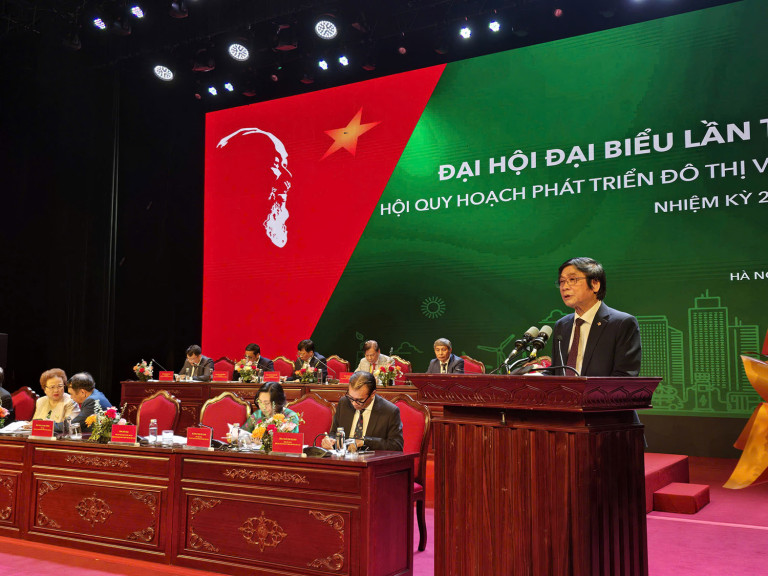
The Congress elected 165 members to the 6th Executive Committee and 45 members to the Standing Committee. Architect Tran Ngoc Chinh, former Deputy Minister of Construction, was re-elected as Chairman of the Association.
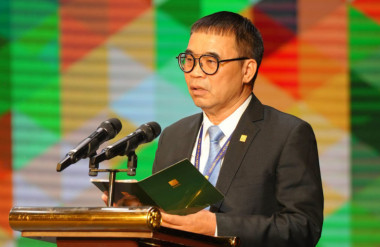
In his opening remarks, Architect Tran Ngoc Chinh emphasized that the 6th National Congress takes place as Vietnam enters a new stage of development, marked by the implementation of a two-tier local government model, institutional reforms, and accelerated digital transformation, scientific and technological development, and innovation. These changes, he noted, present both new opportunities and new demands for urban planning and development, requiring renewed thinking, methodologies and approaches to spatial development and management in a more modern and sustainable direction.
According to him, urban planning must shift from a mindset of “planning for management” to one of “planning to shape and lead development”, moving beyond fragmented, sector-by-sector and locality-based approaches toward integrated and regional planning. The goal is to develop green and smart urban systems that reflect local identity while placing people at the center of the development process.
Reports presented at the Congress highlighted that, after nearly three decades of development, the Vietnam Association for Urban Planning and Development has established itself as a socio-professional organization bringing together experts, researchers, managers and businesses working in urban planning, architecture and development. The Association currently comprises 19 local associations and chapters, 39 institutional members, five research institutes, one center and one affiliated journal, with a total of 2,412 members.
During the 2020 – 2025 term, the Association contributed comments on more than 20 major legal documents related to planning, construction and urban development. It also participated in the development of key policies and legislation, including the amended Capital Law, amended Land Law, Law on Urban and Rural Planning, and Law on Urban Development Management, along with numerous sector-specific decrees and circulars. The Association was also involved in reviewing and appraising major national, regional and provincial plans, as well as plans for major urban areas including Hanoi, Ho Chi Minh City, Thua Thien Hue, Dien Bien Phu, Nha Trang and Con Dao.
In parallel, the Association carried out a range of scientific research projects and organized domestic and international conferences on sustainable urban development, heritage cities and climate change-adaptive planning. It also expanded cooperation with local authorities and international organizations to improve the quality of urban planning, management and development.
According to Architect Tran Ngoc Chinh, during the new term, the Association will continue to strengthen its role in providing consultation and social critique on major national and local policies, programs and projects. It will also enhance connections among experts, research institutes, educational institutions and businesses to mobilize knowledge resources for national development. Science and technology, innovation and digital transformation will be positioned as key drivers for improving professional activities, while Vietnamese culture, identity and people will remain at the heart of urban planning.
For the 2026 – 2031 term, the Association will focus on researching and promoting the application of technologies such as artificial intelligence (AI), Big Data, Geographic Information Systems (GIS), Building Information Modeling (BIM) and Digital Twins in urban planning, management and operations.
The Association will also conduct research into urban development models suited to the two-tier local government structure, strengthen regional connectivity, promote closer integration between urban and rural development, and develop synchronized infrastructure capable of adapting to climate change. These efforts are aimed at supporting the development of green, smart, low-carbon and sustainable cities.
Thu Vân – TCKT.VN
© Vietnam Architecture Magazine