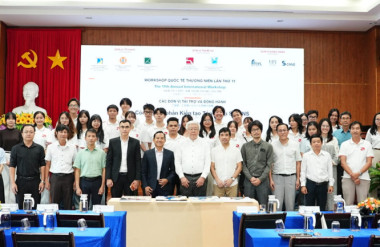
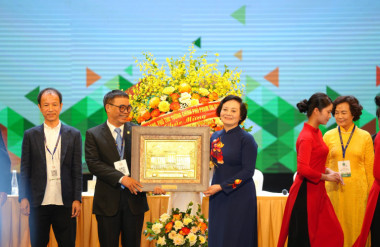
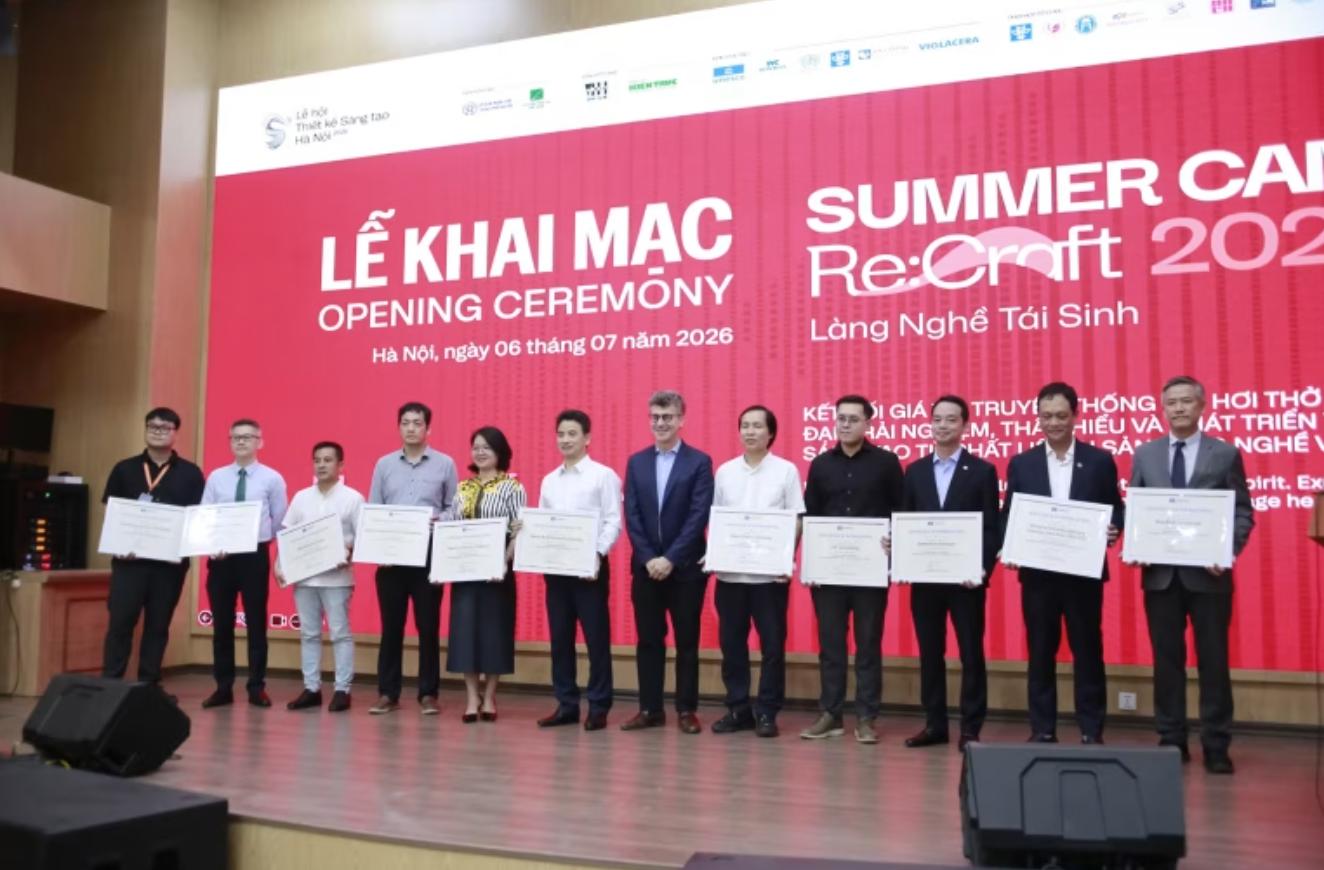
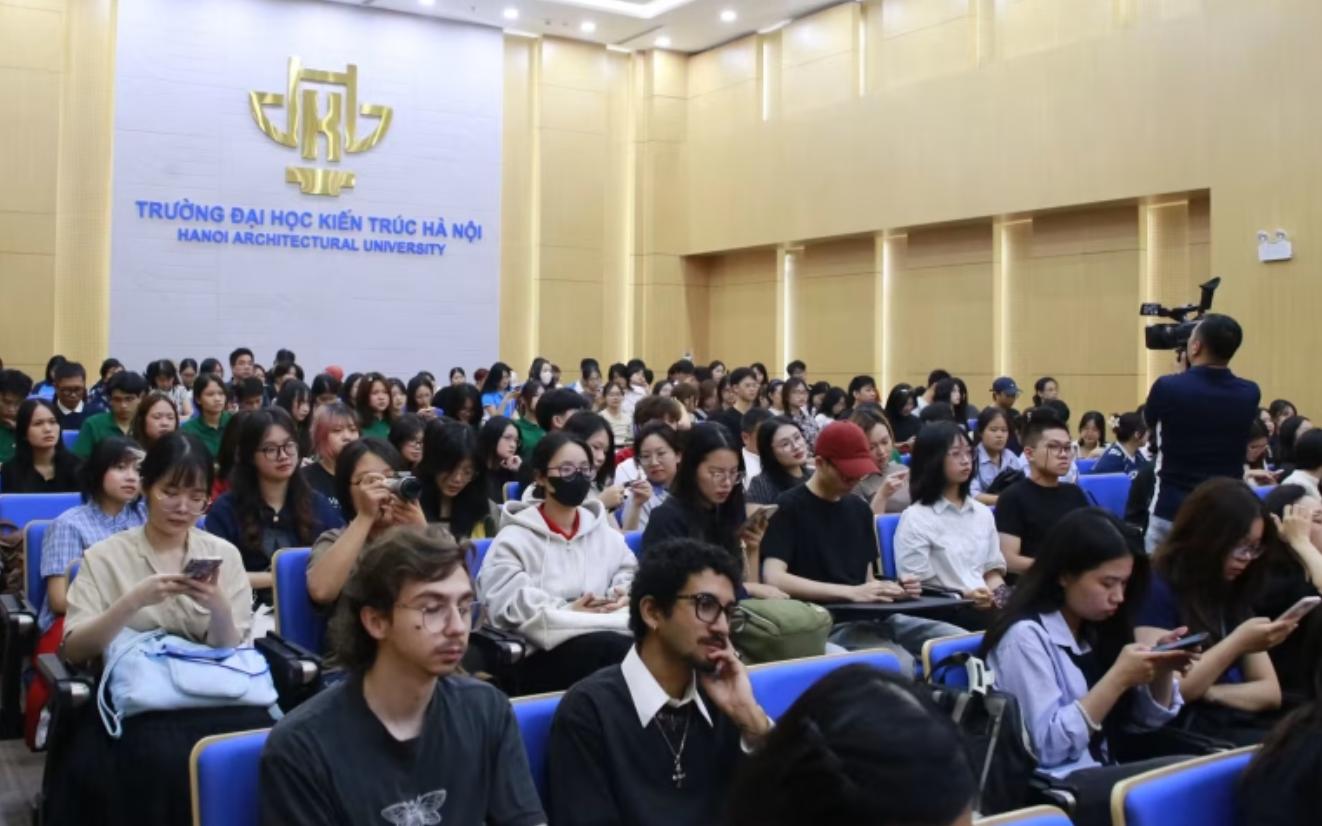
On the afternoon of July 6, 2026, Summer Camp Re:Craft 2026 – Reviving Craft Villages officially opened at Hanoi Architectural University, launching an interdisciplinary creative journey that brings together students, lecturers, experts, and traditional artisans.
Held as part of the Hanoi Creative Design Festival 2026, Summer Camp Re:Craft 2026 is a flagship initiative under the Contemporary Craft Development from Traditional Craft Village Heritage Program, launched by the Hanoi Department of Culture and Sports and Architecture Journal (Vietnam Association of Architects). Conceived as a hands-on creative platform, the program enables young participants to engage with traditional craft heritage not merely through observation, but through research, dialogue, design experimentation, and product development. Organized under the direction of the Festival Organizing Committee, the initiative receives strategic support and professional patronage from UNESCO, the Sovico Group, the British Council, and sponsors including An Cuong Wood Corporation and Viglacera Corporation.
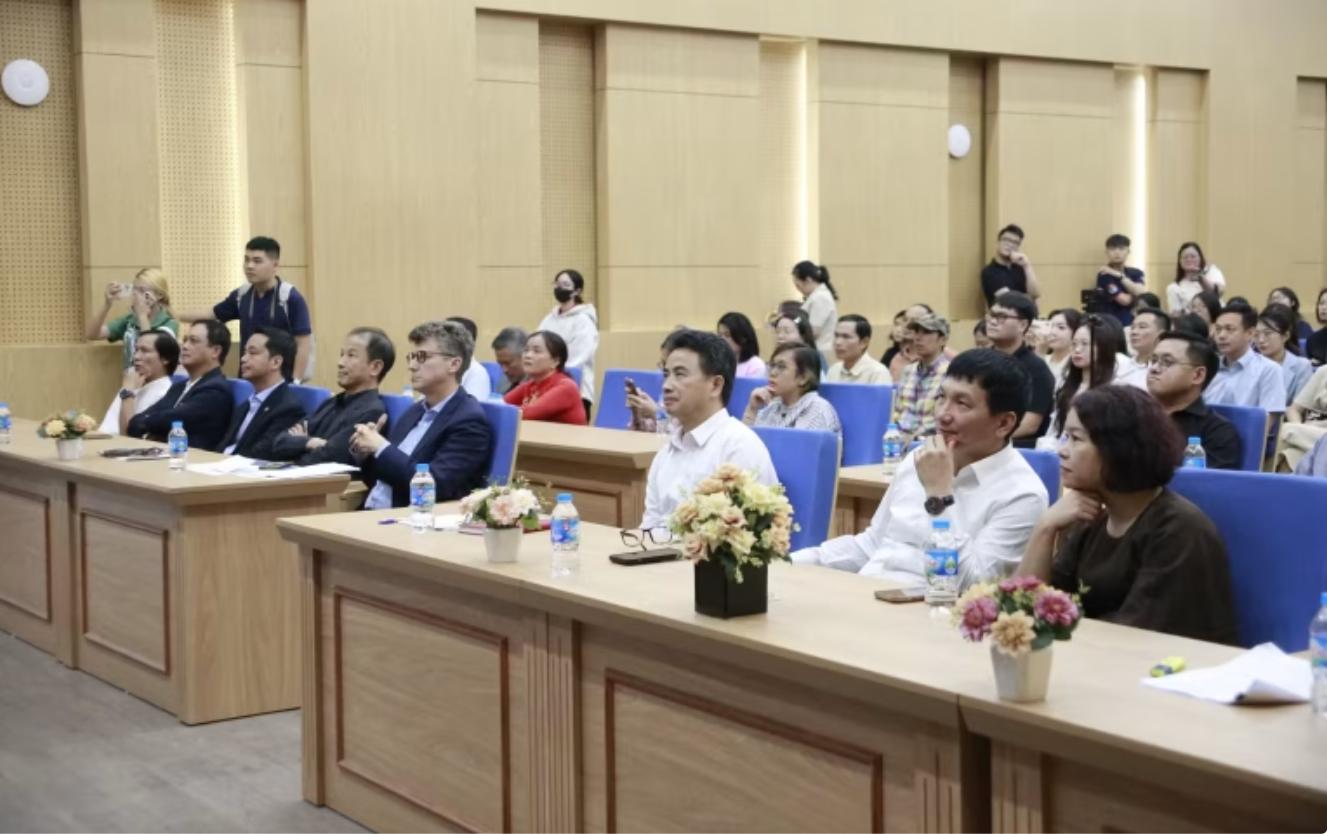
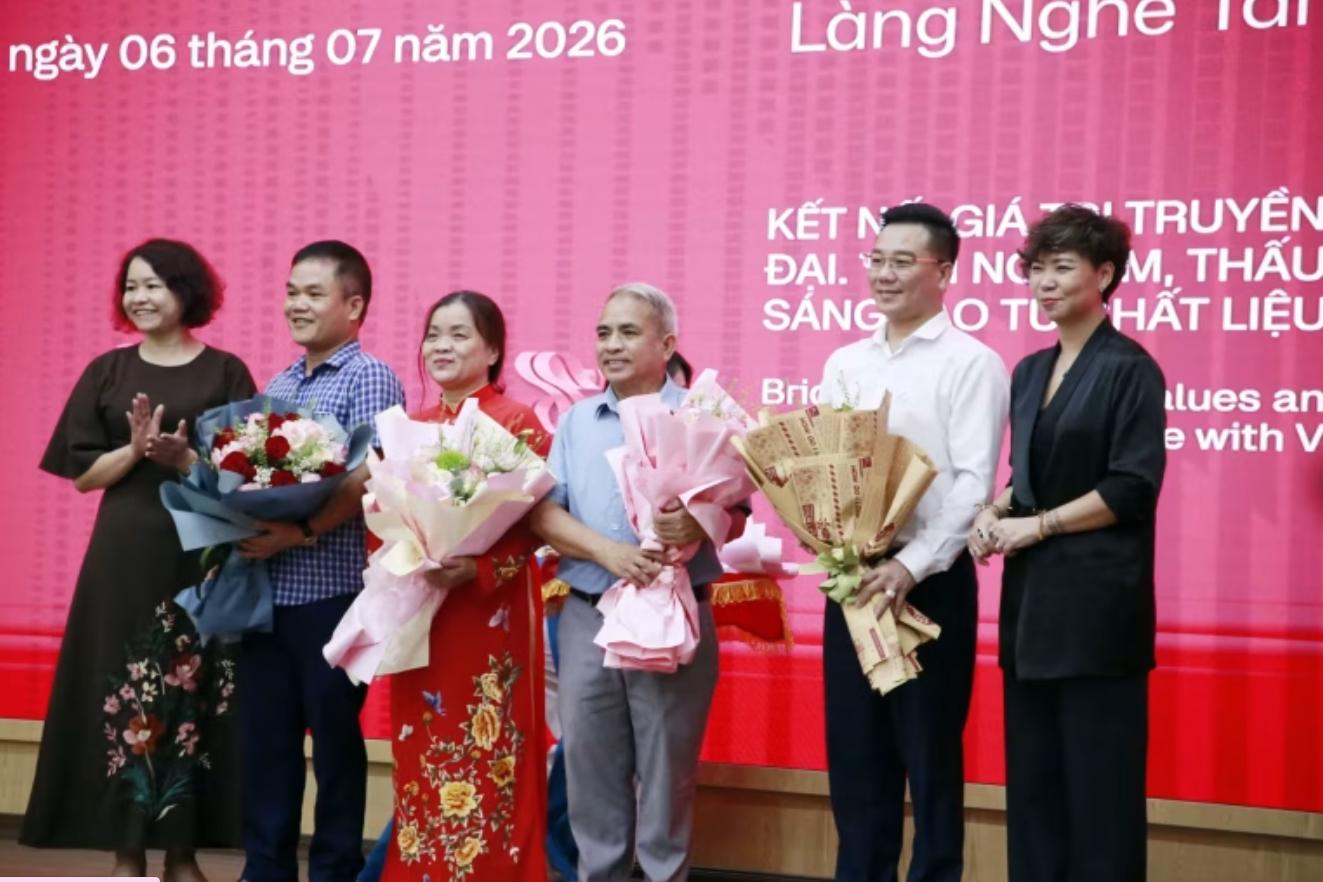
The opening ceremony was attended by Jonathan Baker, UNESCO Representative to Vietnam; Architect Hoang Thuc Hao, Vice President of the Vietnam Association of Architects; Pham Thi Lan Anh, Head of the Heritage Management Division at the Hanoi Department of Culture and Sports; Bui Thi Thanh Huong, Editor-in-Chief of Architecture Magazine; Associate Professor Dr. Vu Ngoc Anh, President of Hanoi Architectural University; along with representatives from universities, experts, lecturers, students, and master artisans from traditional craft villages.
A Platform Connecting Universities, Craft Villages, and Young Creatives
Speaking at the opening ceremony, Associate Professor Dr. Vu Ngoc Anh, President of Hanoi Architectural University, emphasized that Summer Camp Re:Craft 2026 serves as a collaborative platform connecting universities, traditional craft villages, artisans, and partners to foster creativity rooted in heritage conservation.
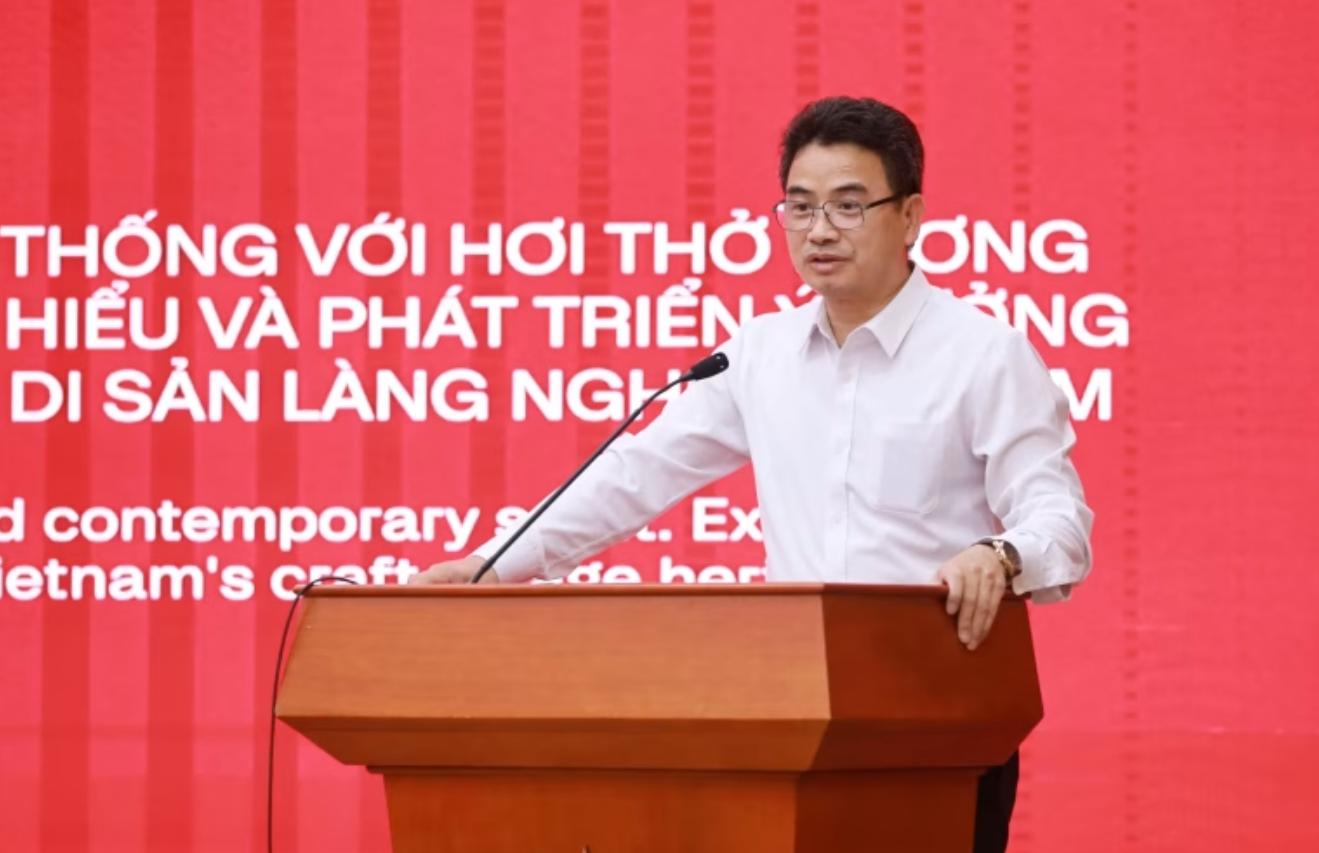
According to Dr. Vu Ngoc Anh, education must be closely connected to real-world practice, enabling students to learn through experience, cultivate a sense of responsibility toward communities, and continue the story of Vietnam’s craft villages through contemporary design thinking. At a time when cultural industries are receiving increasing attention, heritage preservation can no longer rely solely on safeguarding traditions in their original form; it requires innovative approaches that bring traditional values into contemporary life.
Summer Camp Re:Craft 2026 brings together students and lecturers from 11 universities and higher education institutions specializing in art, design, culture, communications, and the creative economy across Hanoi. Participating institutions include Hanoi Architectural University (host institution), FPT University, Hanoi Open University, the School of Interdisciplinary Sciences and Arts – Vietnam National University, Hanoi, University of Industrial Fine Arts, Hanoi University of Civil Engineering, Hanoi University of Culture, Phuong Dong University, National Economics University, Hoa Binh University, and the University of Greenwich. Through interdisciplinary team structures, participants will explore traditional craft villages from multiple perspectives, including design, culture, economics, and communications.
Throughout the program, teams will conduct field visits to traditional craft villages, meet with artisans, study production techniques, observe local cultural environments, and identify what the organizers describe as each village’s “design DNA”-its distinctive colors, patterns, materials, craftsmanship, techniques, and cultural narratives.
Drawing upon these field experiences, each team will develop concepts, create prototype products, complete design documentation, and present their proposals before a panel of experts.
Bridging Traditional Craft Knowledge and Contemporary Design
Commending the initiative, Jonathan Baker, UNESCO Representative to Vietnam, described Re:Craft 2026 as an interdisciplinary platform that enables students to learn directly from master artisans while unlocking the creative potential of younger generations.

He expressed confidence that participating teams would discover new pathways for ensuring the continued relevance of traditional craft heritage in contemporary society, while demonstrating the vital role of young creatives in preserving and advancing local cultural traditions.

From a professional perspective, Architect Hoang Thuc Hao, Vice President of the Vietnam Association of Architects, emphasized the inseparable relationship between architecture, art, craftsmanship, and traditional craft villages.
According to Architect Hoang Thuc Hao, Vietnam – and Hanoi in particular – possesses an extraordinarily rich legacy of traditional craft villages. Their techniques, materials, decorative motifs, handcrafted details, and accumulated artisan knowledge are not merely ornamental elements but embody the memory, identity, and spirit of countless buildings, products, and living environments.

He noted that the program creates opportunities for students, lecturers, artisans, and professionals to exchange ideas, inspire one another, and explore new motivations, directions, and solutions for future development.
“Architecture and design should go beyond fulfilling social responsibility or connecting communities. They must create works with humanistic value-works capable of touching people, communities, and the surrounding environment.”
An Eight-Day Journey to Decode and Reimagine Craft Heritage
Following the opening ceremony and dialogue sessions with artisans, participating teams will embark on an intensive eight-day creative journey. Activities include field research in traditional craft villages, collaborative studio sessions at Hanoi Architectural University, concept development, design sketching, material and technical experimentation, prototype fabrication, design documentation, and final presentations.
At the heart of the program is the Re:Design challenge, which invites participants to reinterpret traditional craft products through a contemporary lens. Teams are also encouraged to develop complementary components under the themes Re:Brand, Re:Create, and Re:Connect, focusing on brand-building strategies, practical applications, market readiness, and telling the stories of craft villages through the language of digital communication.
One of Summer Camp Re:Craft 2026’s defining features is its immersive, practice-based learning environment. Rather than relying solely on classroom instruction, students work directly with artisans, observe traditional production processes firsthand, engage with materials, analyze real-world challenges, and experiment with practical solutions.
Outstanding outcomes from Summer Camp Re:Craft 2026 are expected to be showcased during the Hanoi Creative Design Festival 2026, further promoting the vision of a creative Hanoi rooted in local cultural values-where heritage is not only preserved, but continually reinterpreted, transformed, and brought into contemporary life.
The public can follow the participating teams’ journey throughout Summer Camp Re:Craft 2026 – Reviving Craft Villages via the official communication channels of the Hanoi Creative Design Festival.
© Vietnam Architecture Magazine