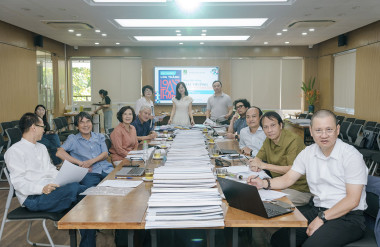
On April 9, 2026, the Vietnam Association of Architects convened a review session to evaluate the implementation plans of four key projects assigned under Decision No. 1246/QĐ-TTg (July 19, 2021) issued by the Prime Minister, approving the Orientation for the Development of Vietnamese Architecture to 2030, with a vision to 2050.
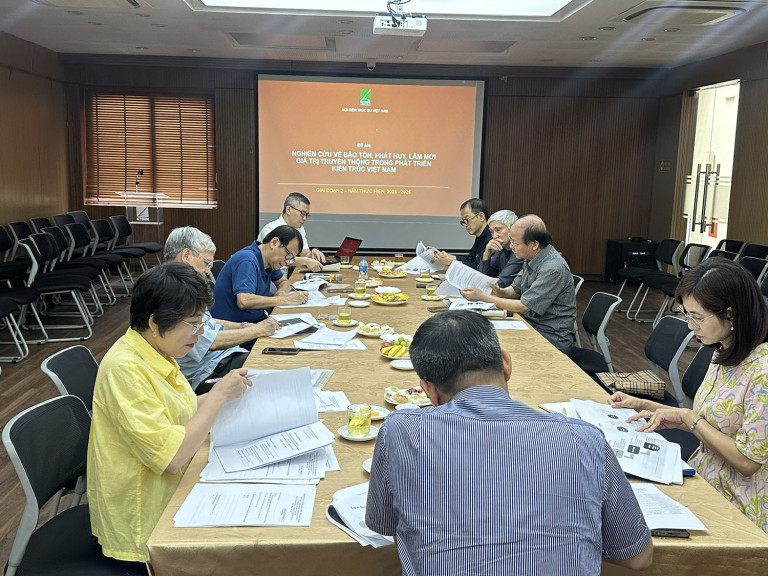
The session played an important role in assessing progress, refining research directions, and enhancing the quality of implementation for the next phase.
These four projects are considered foundational pillars in shaping the identity of Vietnamese architecture in the context of global integration and sustainable development:
- Project on archiving and exhibiting the values of Vietnamese architectural identity (2022 – 2028), led by Khuất Tấn Hưng (Assoc. Prof., PhD, Architect) and Lê Thành Vinh (Architect).
- Project on conservation, promotion, and innovation in the development of Vietnamese architecture (2022 – 2028), led by Hoàng Thúc Hào (Architect) and Nguyễn Quốc Tuân (PhD, Architect).
- Project on training, innovation, and improving the quality of the architectural workforce toward international integration (2022 – 2028), led by Lê Quân (Assoc. Prof., PhD, Architect) and Phan Đăng Sơn (PhD, Architect).
- Project on rural architecture from tradition to modernity in the context of integration (2022 – 2028), led by Phạm Đình Việt (Prof., PhD, Architect) and Lã Thị Kim Ngân (Master, Architect).

During the review, professional councils focused on evaluating implementation progress, research quality, and the feasibility of plans for 2026. This year, the projects will continue core tasks such as field surveys, data updates and consolidation, and systematic documentation, forming clearer research perspectives and directions. Implementation teams will also develop detailed outlines, organize specialized scientific workshops, and finalize reports for Phase 2 evaluation.
Participants emphasized the need to strengthen interdisciplinary approaches, reinforce the linkage between theoretical research and professional practice, and ensure the practical applicability of research outcomes. In addition, mobilizing contributions from experts, policymakers, and the broader community was identified as a critical factor for achieving tangible results.
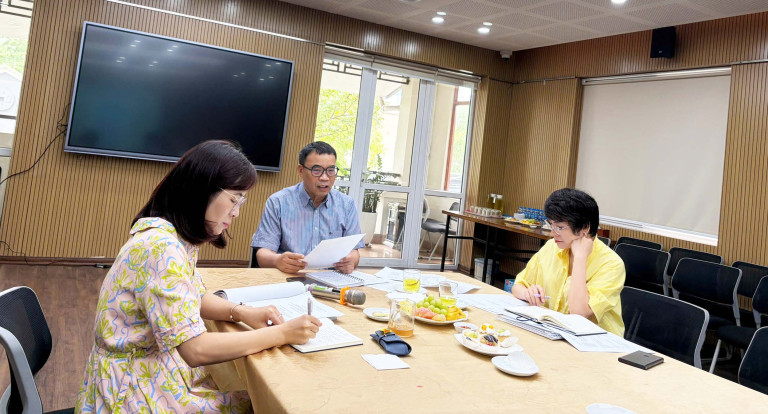
The coordinated implementation of these four projects not only contributes to concretizing the national architecture development strategy but also lays a critical foundation for shaping a distinct Vietnamese architectural identity in the new era, one that both preserves traditional values and fosters innovation, meeting the demands of sustainable development and international integration.
© Vietnam Architecture Magazine