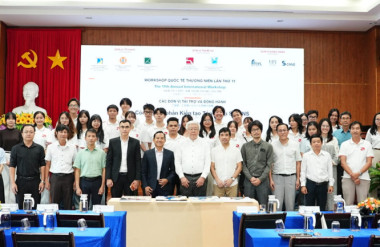
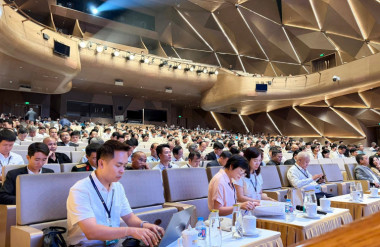
Amid rapid urbanization and escalating climate change pressures, the demand for healthy, energy-efficient living environments is becoming increasingly urgent. On the morning of March 10, 2026, a scientific workshop titled “Healthy Living Spaces – Smart Ventilation Solutions for Tropical Climates” was held in Hanoi in a hybrid format, bringing together experts, architects, scientists, and industry representatives in the field of the built environment.

The event was co-organized by Hanoi University of Civil Engineering and the Center for Urban and Industrial Environment (Vietnam Association for Building Environment), with Architecture Magazine serving as the media sponsor. The workshop provided a platform for sharing research, practical experience, and design solutions aimed at improving indoor air quality and advancing climate-responsive, sustainable buildings.
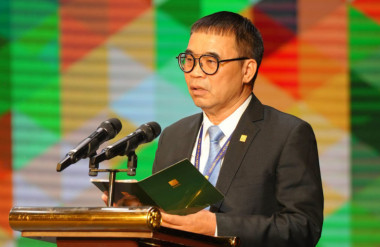
In his opening remarks, Nguyen Huu Tien, Deputy Director General of the Department of Science, Technology, Environment and Building Materials (Ministry of Construction), emphasized the Ministry’s strong commitment to leveraging science and technology to optimize building energy performance. He underscored that intelligent design solutions, particularly effective ventilation strategies, whether natural or mechanical, play a critical role in creating comfortable, healthy, and environmentally friendly living spaces. He also expressed hope that insights from the workshop would inform the continued refinement of regulatory frameworks and standards, promoting energy-efficient, low-emission buildings and improved living environments.

From an academic and research perspective, Nguyen Hoang Giang, Vice Rector of Hanoi University of Civil Engineering, reaffirmed the university’s leading role in key areas of architecture and construction. The institution is currently recognized as one of 13 centers of excellence in training and research in advanced materials and construction technologies. In line with Vietnam’s commitments at COP26, the university has identified priority research directions related to the built environment and sustainable construction, and has established Centers of Excellence (COEs) to advance strategic research programs. The workshop’s theme, he noted, is among the institution’s core research focuses.
Representing the private sector, Hirofumi Abe, Deputy General Director of Panasonic Electric Works Vietnam, highlighted indoor air quality as a growing concern with direct implications for human health in the context of urbanization and climate change. He noted that ventilation systems play a vital role in improving air quality, enhancing thermal comfort, and optimizing building energy use. Panasonic currently offers a range of ventilation products and solutions, aiming to contribute to healthier living environments and improved quality of life in Vietnam.
During the technical sessions, speakers presented research findings and practical experiences related to ventilation design in tropical climates. Architect Hoang Thuc Hao, Vice President of the Vietnam Association of Architects, together with Dr. Pham Khanh Toan, delivered a presentation on “The Evolution of Natural and Mechanical Ventilation in Vietnamese Architecture.” They emphasized the growing trend of hybrid ventilation – combining natural and mechanical systems – to achieve optimal microclimatic performance and energy efficiency. Case studies from recent National Architecture Award-winning projects were also highlighted, spanning residential, hospitality, healthcare, educational, and public buildings.
From a technological standpoint, Philip Ong of Panasonic’s R&D Center in Singapore introduced solutions for optimizing ventilation and air conditioning to enhance occupant health. He shared international experience from Japan, Singapore, and other countries, and proposed a simplified classification of six ventilation levels. Raising awareness of these levels, he noted, is essential for selecting appropriate solutions tailored to specific building types and climatic conditions. Ventilation fans, while consuming minimal energy, can significantly improve indoor air quality.
Researchers from Hanoi University of Civil Engineering also contributed in-depth analyses. Associate Professor Pham Thi Hai Ha and Dr. Nguyen Thanh Trung compared building envelope and ventilation regulations across Vietnam and several Southeast Asian countries. Their findings suggest that while Vietnamese architecture traditionally prioritizes natural ventilation – well-suited to local climate and usage patterns – current standards lack specific quantitative requirements for opening areas or ventilation performance, posing challenges for design application and compliance. As air-conditioning use becomes more widespread, clarifying the transition conditions between natural and mechanical ventilation emerges as a critical research issue.
From an international perspective, Professor Lam Khee Poh of the National University of Singapore ներկայացed a model of climate-adaptive design for a net-positive energy building at the university. The approach integrates enhanced natural ventilation, biophilic design strategies, walkability, and reduced dependence on motorized transport.
The workshop concluded with a panel discussion titled “Smart Ventilation for Healthy and Energy-Efficient Living Spaces: Trends and Challenges for Vietnamese Architecture,” moderated by Dr. Nguyen Cao Lanh, Dean of the Faculty of Architecture and Planning at Hanoi University of Civil Engineering. The session attracted active exchanges among experts and participants, addressing issues such as material standards, antimicrobial materials, pollution mitigation strategies in buildings, and the application of recycled materials.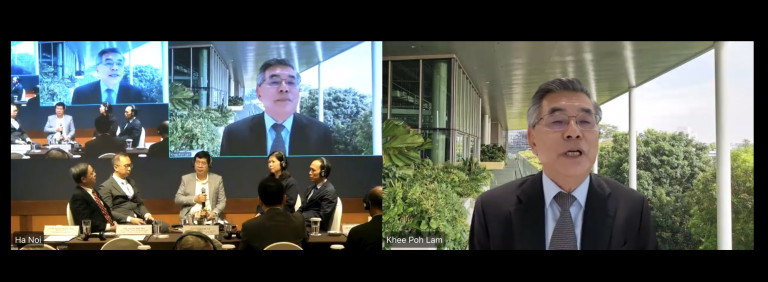
In the discussion, Associate Professor Pham Thi Hai Ha noted that advances in simulation tools now enable designers to quantitatively assess environmental factors such as airflow, heat transfer through building envelopes, and material moisture. However, the use of advanced simulation software still requires significant licensing costs and specialized expertise.
Adding a practical perspective, Dr. Pham Khanh Toan emphasized the importance of user experience surveys, noting that perceived thermal comfort does not always align with technical metrics. He argued that ventilation considerations should be integrated from the earliest stages of design – from wind orientation and spatial layout to overall structural configuration.
Offering an international outlook, Professor Lam Khee Poh highlighted the growing importance of hybrid ventilation solutions in climate-adaptive buildings. He added that in Singapore, researchers are increasingly looking to big data and artificial intelligence (AI) to support the development and continuous updating of technical standards in the built environment. However, he stressed that the effectiveness of AI depends fundamentally on the availability of comprehensive, accurate, and reliable data systems.
The workshop concluded with substantive professional exchanges, opening new directions for research and design in climate-responsive architecture. The insights shared not only contribute to advancing scientific research but also offer practical solutions toward healthier, energy-efficient, and sustainable buildings in the face of intensifying climate change.
Thu Vân – TCKT.VN
© Vietnam Architecture Magazine