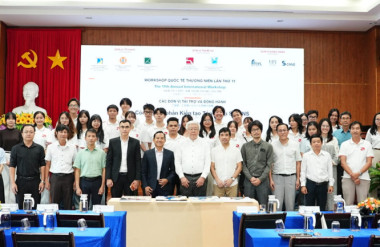
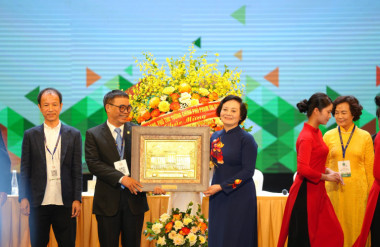
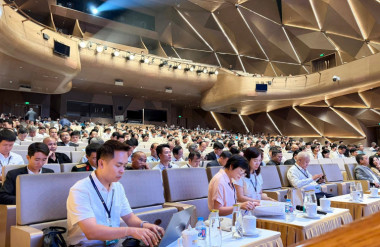
On March 27, 2026, in Hanoi, the Steering Committee 35 of the Party Committee of the Vietnam Fatherland Front and central mass organizations, in coordination with the Party Committee of the Vietnam Journalists Association, convened a conference titled “Improving the Quality of Political Theory, Professional Expertise, and Digital Skills in Association with the Protection of the Party’s Ideological Foundation”. The event took place at the headquarters of the Vietnam Journalists Association.
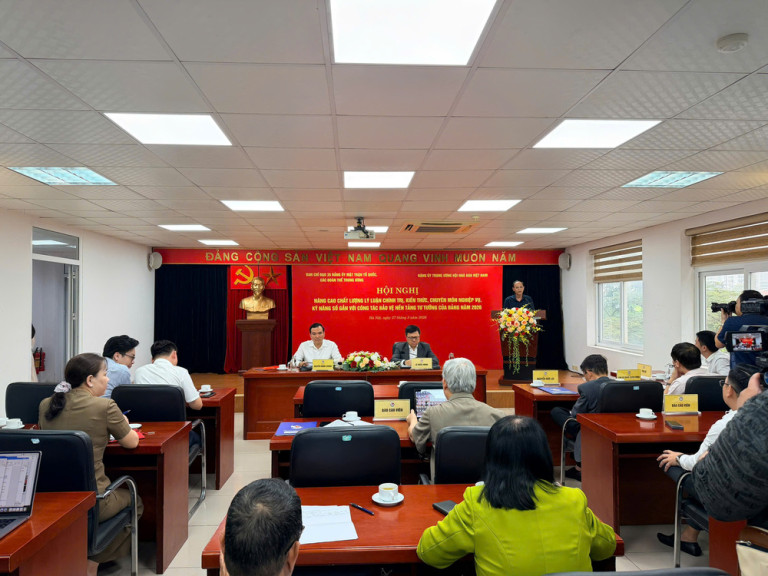
The conference underscored an urgent mandate: the press must shift from a defensive posture to a proactive stance on the information front, grounded in solid theoretical foundations, professional excellence, and mastery of digital technologies.
The conference was co-chaired by Le Quoc Minh, Member of the Party Central Committee, Editor-in-Chief of Nhan Dan Newspaper, Deputy Head of the Party Central Committee’s Commission for Information, Education and Mass Mobilization, Secretary of the Party Committee and Chairman of the Vietnam Journalists Association; and Nguyen Minh Chung, Standing Committee Member, Head of the Commission for Information, Education and Mass Mobilization, and Deputy Head of Steering Committee 35 under the Party Committee of the Vietnam Fatherland Front and central mass organizations.
The event took place against the backdrop of the political system continuing to implement tasks following the success of the 14th National Party Congress, the elections of deputies to the 16th National Assembly and People’s Councils at all levels for the 2026 – 2031 term, as well as preparations for upcoming congresses of various organizations. In this context, safeguarding the Party’s ideological foundation and the political system remains an urgent priority for Party organizations, press agencies, media, and publishing institutions.
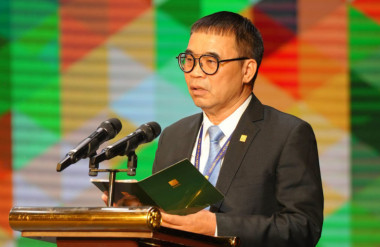
In his opening remarks, Nguyen Duc Loi, Permanent Vice Chairman of the Vietnam Journalists Association, warned of a shift from the “information age” to an “age of manipulated truth”, as hostile forces increasingly deploy artificial intelligence, deepfake technology, and big data to disseminate sophisticated disinformation. He noted that the boundary between truth and falsehood is becoming increasingly blurred, requiring the revolutionary press not only to strengthen professional capacity but also to proactively detect, analyze, forecast, and guide public opinion.
Delegates focused discussions on three key groups of solutions: establishing rapid-response networks to address fake news; intensifying training to enhance journalists’ digital skills; and reinforcing professional ethics in the online environment.
According to Nguyen Minh Chung, the press must undergo transformation toward greater professionalism, modernity, and human-centered values; assert greater control over cyberspace; and strengthen digital communication capabilities. In particular, developing high-quality human resources, especially those engaged in ideological and journalistic work, was identified as a decisive factor. Each journalistic work, he emphasized, should go beyond reporting to help shape public opinion, reinforce social trust, promote positive information, and counter erroneous viewpoints.
The conference also featured six presentations from various press agencies and units, sharing practical experiences in persuasive communication, countering false narratives, improving digital media quality, and navigating the challenges of “low-content” environments.
Drawing from these discussions, the conference aimed to build consensus and outline concrete tasks for the period ahead. Key priorities include accelerating newsroom digitalization to enhance forecasting and rapid response capabilities; innovating the communication of Party resolutions to make them more accessible and engaging, particularly for younger audiences; and strengthening coordination mechanisms between press agencies and regulatory bodies in handling harmful and false information.
The conference is expected to contribute to strengthening the political steadfastness, professional competence, and technological capabilities of journalists, thereby reaffirming the pioneering role of the revolutionary press in safeguarding the Party’s ideological foundation and advancing toward a professional, humane, and modern media landscape.
© Vietnam Architecture Magazine