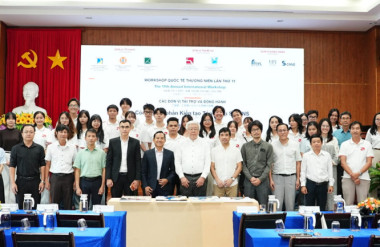
On December 10, 2025, at the Hanoi Children’s Palace (Hoan Kiem District), the Announcement Ceremony of the Activity Framework for the Hanoi Festival of Creative Design 2026 and the Launch of the Hanoi Creative Spaces Network took place. The event was directed by the Hanoi People’s Committee and the Vietnam Association of Architects, and organized by the Hanoi Department of Culture and Sports in collaboration with Architecture Magazine, with the accompaniment of UNESCO, Sovico Group, and many other key partners.

The Hanoi Festival of Creative Design (HFCD) is an annual event held since 2021, with the participation of the creative design community nationwide. Over the years, the Festival has gradually established its distinct identity through themes rich in contemporary cultural values, such as: Unleashing Creativity – 2021: New Vitality for Heritage; Design and Technology – 2022: Creativity – Contribution – For the Community; The Flow of Connectivity and Creative Heritage – 2023: Design – Community – Creativity; and Creative Intersection – 2024: A Dialogue Between Architectural Heritage and Contemporary Art.
Continuing the creative momentum generated from the community, the Hanoi Festival of Creative Design has not only revitalized forgotten heritage sites, transformed spaces into creative hubs, and connected young people with the wider community, but more importantly, has brought together resources, unlocked latent potential, and contributed to advancing policies for the development of Hanoi’s creative economy.
On this foundation, the Hanoi Festival of Creative Design 2026 is oriented to go beyond the framework of a conventional annual cultural or artistic event. It is envisioned as an urban creative institution-a platform for convergence, experimentation, and dissemination of new ideas-contributing to the improvement of quality of life for the city’s residents. In 2026, the Festival will transition from merely “organizing a festival” to “building an urban creative ecosystem,” adopting an interdisciplinary approach that connects visual arts, design, technology, architecture, sound, data, crafts, performance, and more. This approach aims to create multi-sensory experiences, new art forms, and internationally oriented interactive spaces.
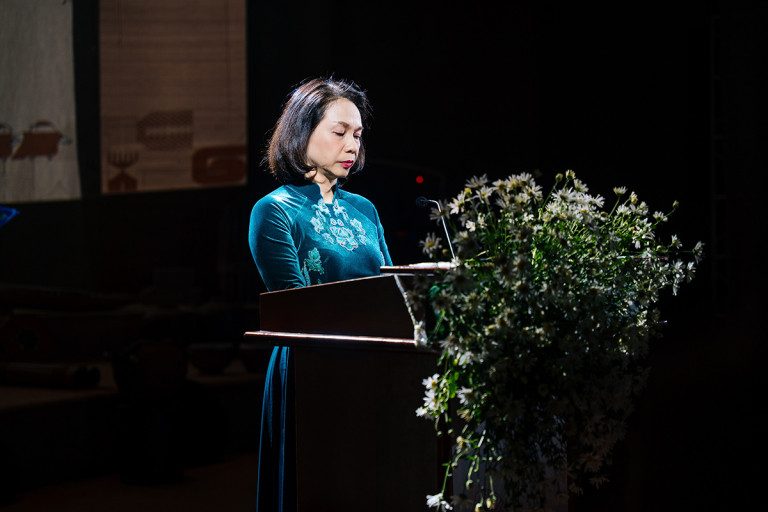
At the opening of the Announcement Ceremony for the Hanoi Creative Design Festival 2026 framework, Ms. Vu Thu Ha, Vice Chairwoman of the Hanoi People’s Committee, emphasized: “Hanoi hopes that projects, ideas, and concrete actions that explore and promote cultural values-both tangible and intangible heritage, as well as traditional craft villages-will evolve into creative projects with commercial viability and long – term development potential, where efforts to preserve culture, innovate thinking, and develop the economy are harmoniously connected.
The City of Hanoi looks forward to even stronger collaboration from management agencies, universities, enterprises, artisans, architects, designers, artists, and the entire creative community to jointly build a Vietnamese creative ecosystem rich in identity, effective, and sustainable at a new level-continuing to realize Hanoi’s policy of leveraging cultural resources for the sustainable socio-economic development of the Capital”.
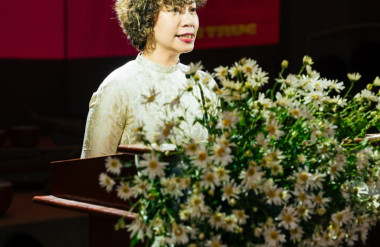
Accordingly, the Festival’s core activities are oriented toward building a creative economy-as a hub for connection, dialogue, and experimentation with creative economic models-across the following areas:
- Creative Expo
- Creative Fair
- Creative Talk
- Creative Challenge
- Creative Project
- Creative & Design Awards
- Creative Funds
- Creative Hubs
Participating venues of the Festival will continue to be updated and expanded to promote creative ideas from artists and the community, encourage pilot initiatives in creative economy and tourism, and aim toward sustainable, long-term operational projects that contribute to economic development, quality of life improvement, and urban regeneration. A distinctive feature of this year’s Festival is the citywide diffusion of creative spirit, structured into specific thematic zones:
- Heritage Space (Dong Xuan Market – Bac Qua area and Dong Xuan Cultural Industry Center): The central zone of the Festival, where creators and designers will curate installations that merge heritage with creativity, pilot commercial – cultural development models, and connect artisans, designers, and merchants to form experiential routes linking heritage, creativity, and commerce-transforming a traditional market into a marketplace of the new creative economy.
- Kẻ Chợ Space (Hanoi Old Quarter with its 36 streets): Revitalizing the “Market – Street – Craft” space through the creation of “Creative Guild Streets” aligned with cultural industry sectors, featuring exhibition, performance, and interactive experiences connected to the living heritage of craft streets and Hanoi’s traditional craft villages.
- Future Space (Network of city parks): Focused on “Creative Education – Future Skills,” serving as playgrounds for students at all levels, with public design spaces, international pavilions, competitions, outdoor fab-labs, workshops, creative camps, and community activities.
- Ecological Space (Mid-River Island of the Red River): Envisioned as a pilot zone for “Urban – Ecological Symbiosis,” showcasing experimental ideas that prioritize landscape art, local materials, circular design, seasonal experiences, and research into waterway experiential routes along the Red River.
- Community Space (Across the entire city): Emphasizing the resonance of creative activities and creative economic models, calling for participation from embassies, international organizations, cultural centers, heritage and cultural sites at ward and commune levels, shopping centers, universities, creative spaces, galleries, museums, theaters, restaurants, and cafés-either by hosting activities or supporting artists and communities in organizing events.
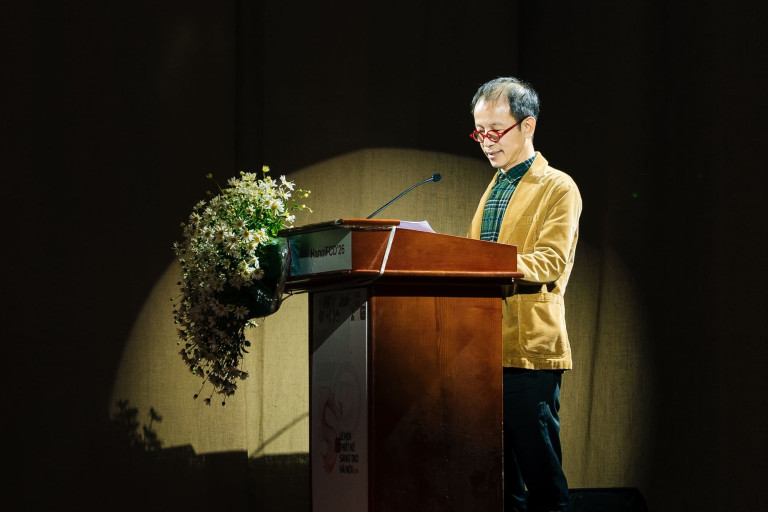
To implement the Festival’s ecosystem-oriented development strategy, Architect Hoang Thuc Hao, Vice President of the Vietnam Association of Architects, underscored the role of architects, designers, artists, and artisans in creating and shaping cultural spaces – where ideas are nurtured, tested, and developed into concrete solutions for the city and the community. He stated: “The Vietnam Association of Architects will continue to accompany the profession, fostering interdisciplinary connections with designers, artists, and artisans in the journey of creativity-designing inspiring spaces rooted in everyday life with lasting impact. I believe this represents a deeply committed and distinctive contribution of Vietnam’s creative community: humanity, simplicity, local materials, community engagement, and the ability to regenerate small yet vibrant spaces. With the City’s strong vision, the broad participation of the creative community, and the pioneering role of architects, the Hanoi Festival of Creative Design will be a resounding success-affirming Hanoi as a true Creative City, where heritage is respected, people are inspired, and the future is shaped every day”.

Speaking at the ceremony, Mr. Jonathan Wallace Baker affirmed: “The shift from a festival to building a creative ecosystem will create sustainable opportunities for designers, artists, creative enterprises, students, and the community. Creativity thus becomes a shared practice-where everyone participates, co-creates, and integrates it into daily life. UNESCO strongly supports Hanoi’s creative journey and is pleased to accompany the city on its path toward becoming a space of imagination, connection, and innovation”.
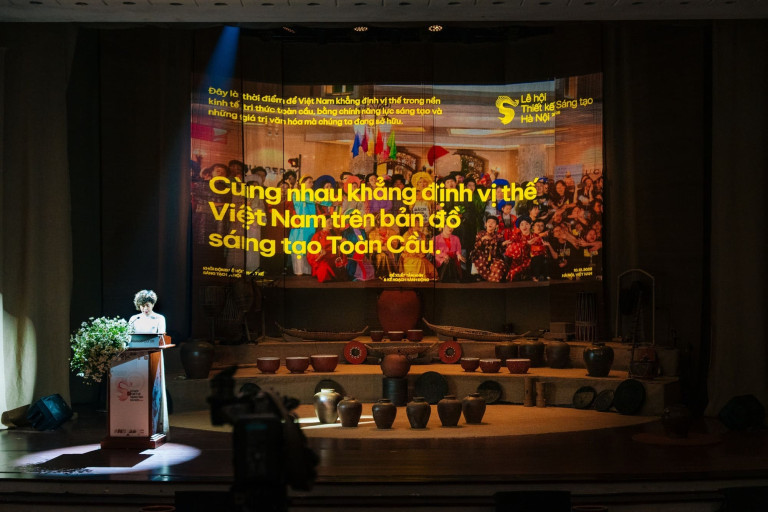
The Hanoi Festival of Creative Design 2026 will officially kick off with the event Creative Convergence, to be held in early January 2026 at Dong Kinh Nghia Thuc Square and the Hoan Kiem area. Featuring unique interdisciplinary artistic connections, the event aims to bring together the creative spaces network, propose diverse activities and applicable creative ideas, and mobilize resources to participate in HFCD 2026 – toward building a social innovation ecosystem that serves the development of the Capital’s cultural industries.
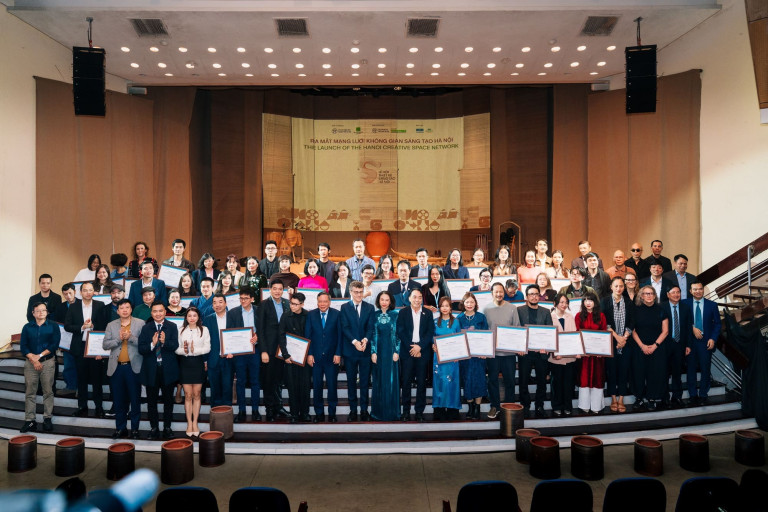
At the Announcement Ceremony, the Hanoi Department of Culture and Sports also announced its decision and awarded Certificates of Hanoi Creative Cultural Spaces to 82 creative cultural spaces that fully meet the criteria set out in the classification and evaluation framework for participation in the Hanoi Creative Cultural Spaces Network. The event marks Hanoi’s efforts to affirm the importance and role of the creative community in building a community-based ecosystem – representing a new step forward in the journey toward a sustainable and inspiring Creative City.


Information and materials related to the activities of the Hanoi Festival of Creative Design 2026 will be published on the Architecture Magazine website and its official fanpage. Readers are warmly invited to follow and stay updated.
© Vietnam Architecture Magazine