General Assessment
The National Architecture Award (NAA) is the most prestigious accolade granted to architectural works across all categories – from planning and landscaping to public buildings and housing, including interior design. In the 2024-2025 season, the NAA Council selected one Gold, one Silver, and three Bronze prizes for the Interior Design category. Through a rigorous evaluation process, the awarded works this season share a common success: the effective use of “local materials”. It is evident that Vietnamese interior design has begun to find its “inevitable” path and is shaping its own style. These honored designs demonstrate a coherent and harmonious development, enhancing architectural functionality and shaping aesthetics through a thoughtful exploration of local materials.
Local Materials and Diverse Approaches
In the context of deep international integration, the influx of interior design culture from developed countries, including spatial organization, furniture, equipment, and materials, brings both opportunities and the risk of losing local identity. Vietnamese interior architecture, in many instances, has been overwhelmed or “invaded” by international styles, often encouraged by the foreign-favoring mindset of many Vietnamese investors.
In such a context, it is encouraging to witness the emergence of pioneering designers and “wise” investors who, while embracing global design excellence, have focused on leveraging local materials to shape spatial experiences and aesthetic impressions. In this article, the term “local materials” refers to the design elements used to organize interior spaces and create a unique aesthetic identity for each project. These materials include culturally distinctive local elements, traditional regional materials, and natural conditions such as sunlight, wind, and greenery. Local materials span traditional resources used by our ancestors, updated technologies, and selectively adopted global innovations. The five award-winning works in the Interior Design category at the 2024-2025 National Architecture Awards are vivid proof of these concepts through their diverse creative solutions. Let us take a closer look at these projects.
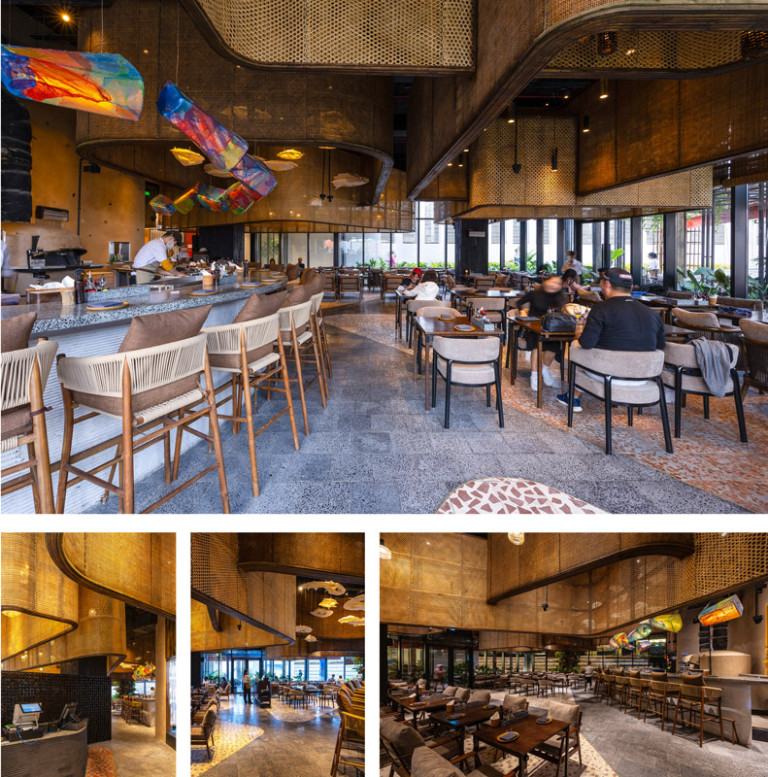
Located in the heart of Hanoi’s Old Quarter, near the Temple of Literature, Grand Mercure Hanoi is a luxury hotel under the management of the Accor Group. It was designed by architects Le Truong, Nguyen Hoang Duc, Tran Ngoc Anh, and their team (TTA-Partners). The project offers not only a luxurious stay but also a design statement deeply rooted in local spirit – where Vietnamese heritage is reinterpreted in a modern, sophisticated, and emotional design language.
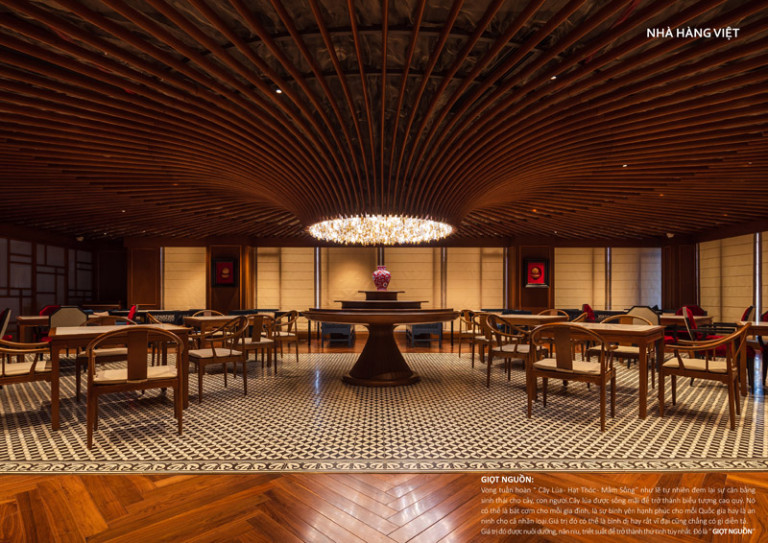
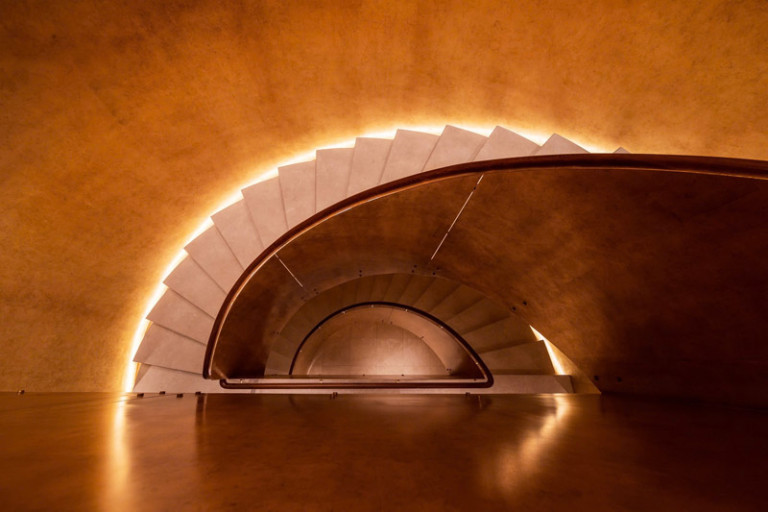
Inspired by the image of rice plants and grains – symbols deeply embedded in Vietnamese cultural consciousness, the design team developed a consistent design narrative. The rice plant is not only a visual motif but also a “red thread” linking interior elements, from shapes and materials to lighting, evoking simplicity, elegance, and depth.
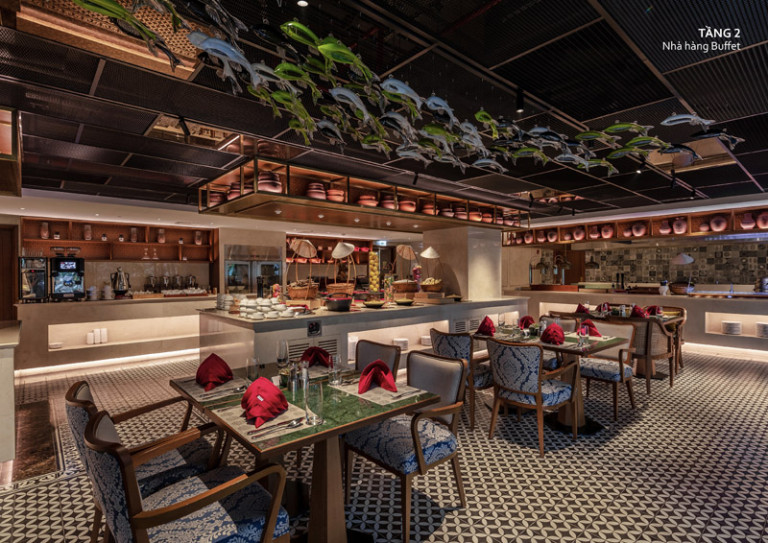
The interiors of Grand Mercure Hanoi are crafted as a “living museum” of Vietnamese culture: where every detail is meticulously chosen and designed. Traditional elements such as paneled doors, the iconic red of the Temple of Literature; embossed copper from Dai Bai village, Ha Thai lacquerware, Bat Trang ceramics, and objects inspired by the fish trap baskets used by Northern farmers are thoughtfully reimagined through contemporary design language, resulting in an aesthetic that bridges tradition and modernity.
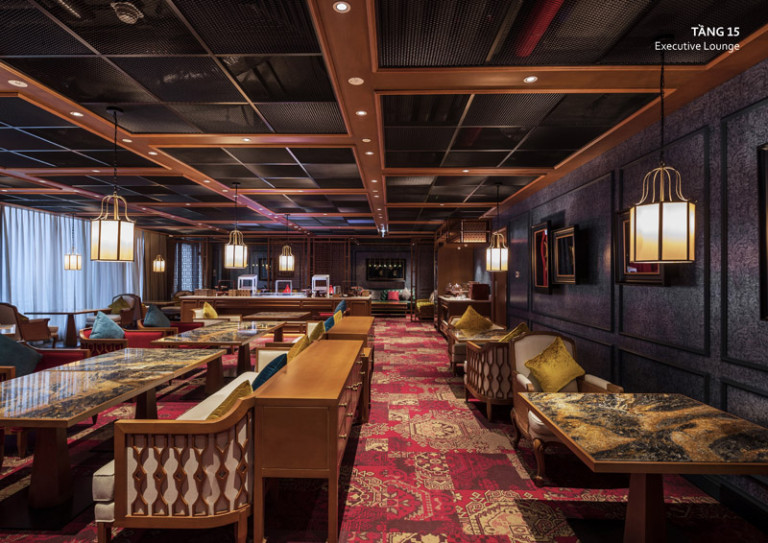
The Indochine-Boutique style is expressed with flexibility and finesse throughout the spaces: from the lobby, restaurant, and ballroom to each guest room. The shapes, materials, textures, colors, precision, and harmony among materials have created a luxurious, distinctive, and refined whole.
Through a balanced fusion of local identity and global design standards, Grand Mercure Hanoi has established itself as a benchmark for contemporary Vietnamese interior design. Not only did it win the Gold Prize in the Interior Design category at the National Architecture Awards, but it also received numerous international accolades.
Grand Mercure Hanoi has transcended the definition of a conventional hotel, becoming a spatial work of art, a place that preserves, narrates, and inspires Vietnamese culture through a contemporary, luxurious, and authentically local aesthetic.
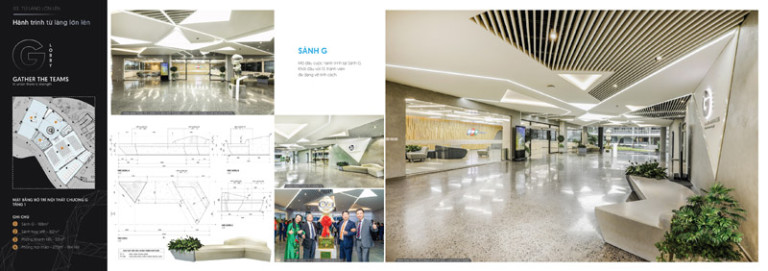
The Silver Prize-winning project FPT F-Ville 3 Campus presents a narrative through space that traces the formation and growth of FPT Software. The idea of “growing from the village” guided the entire creative journey and represents the exploration of local materials in a spiritual dimension. According to the authors, the village is an essential space for maintaining cultural values and serves as design inspiration. The proposed work and communal areas are modeled on the Northern Vietnamese village, expressing cultural identity through conceptual thinking rather than literal depiction.
The spatial layout of the building’s six lobbies unfolds from “the beginning” to “breaking all limits,” symbolizing the growth of a Vietnamese technology group. The use of ceiling, floor, and wall materials shows a deliberate blend of a few traditional materials as a base, with modern elements layered on top, yielding a youthful form appropriate for a creative software enterprise.
The use of traditional materials such as terrazzo and natural wood is moderated and harmonized with new materials, bringing about a fresh, dynamic atmosphere. Exploiting local materials must primarily serve human needs and the building’s purpose, not merely replicate traditional aesthetics. By evoking the spiritual value of Vietnamese culture through a stylized village concept, the design powerfully expresses the theme of evolving Vietnamese identity from traditional foundations, a compelling and meaningful interpretation of local material.
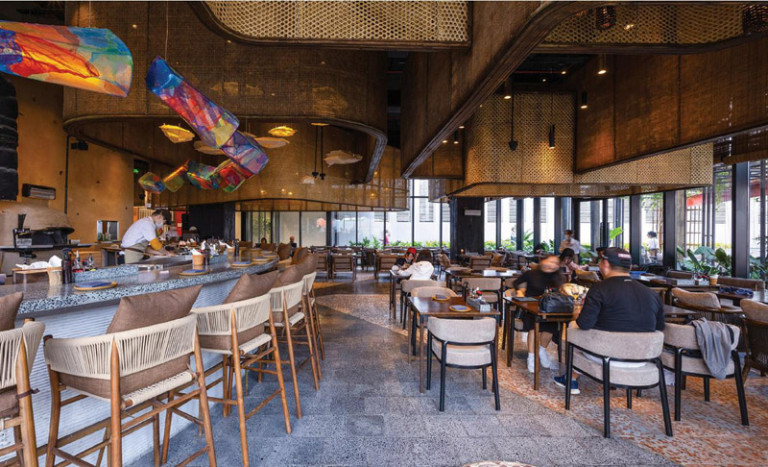
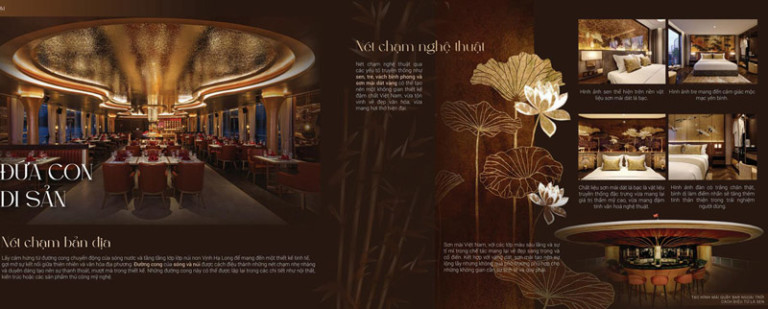
Among the Bronze-winning projects, in addition to the skillful application of traditional handmade materials like bamboo, lacquerware, and symbolic motifs such as lotus flowers and storks in Pizza 4P’s Lotte Tay Ho and Sea Stars Cruise, the M92 Boutique Hotel in Da Nang stands out for another creative approach. Reflecting a youthful, modern spirit in a coastal city and facing strong solar radiation, the authors cleverly designed the building based on the growth of tropical plants. Sunshades resembling leaves or traditional flat panels not only cool the guest rooms but also create visual highlights and diffuse lighting effects.
Their design carefully balances sun shielding with natural ventilation, integrating local greenery into both exterior and interior, one of the most natural applications of local material. It creates contrast and celebrates nature, following and respecting it, crucial for a hospitality project.
What makes all five projects commendable is their pursuit of tradition, not by copying old forms but by reinterpreting them in familiar yet novel ways through blending the old and new. The ancestral wisdom of local craftsmanship has been subtly and methodically refined. Each work evokes a unique emotion, suited to its locality and function, but all share the same foundational principle: thoughtful use of local materials.
Conclusion
Through the five award-winning modern interior designs, as a member of the NAA Council, we are pleased to see a trend and methodology taking shape, one that tactfully explores local materials. This allows both designers and their works to develop a distinct identity rich in Vietnamese character within a globalized context. Such efforts are truly valuable, and they give us hope for the emergence of a clearly defined Vietnamese interior design style, one that honors tradition, centers on people, and connects architecture to specific places. The use of local materials is both a goal and a driving force for the development of Vietnamese architecture and interior design. We hope that by analyzing and critiquing the winning NAA projects (across all categories), we can draw meaningful lessons and contribute to building a theoretical foundation to guide Vietnamese architecture toward realizing its full potential.
Assoc. Prof. Dr. Architect Vu Hong Cuong
© Vietnam Architecture Magazine