On May 30, National Assembly Chairman Trần Thanh Mẫn officially signed and promulgated the Resolution on the Pilot Implementation of Special Mechanisms and Policies for the Development of Social Housing. This National Assembly resolution establishes several special mechanisms and policies to be piloted nationwide in support of social housing development.
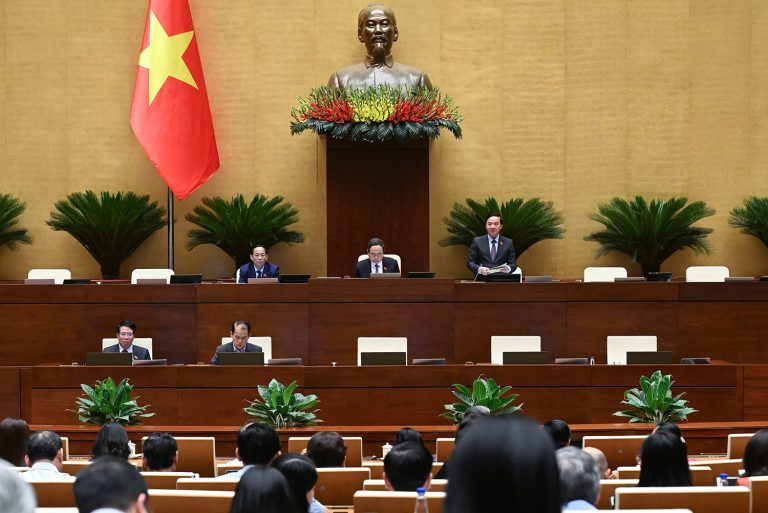
Previously, on May 29, during the continuation of the 9th session, the National Assembly voted to adopt the resolution with the majority of delegates in favor. Before the vote, Minister of Construction Trần Hồng Minh, authorized by the Prime Minister, presented a summary report on revisions to the draft resolution based on assessments from the Committee on Legal and Judicial Affairs, feedback from National Assembly delegates, and conclusions from the Standing Committee of the National Assembly.
Vice Chairman of the National Assembly Nguyễn Khắc Định, who presided over the session, noted that the draft resolution had been reviewed by the Standing Committee on May 27. The Committee agreed with the draft and supported submitting it to the National Assembly for approval.
The resolution consists of 14 articles and will be implemented over a 5-year pilot period. The resolution was passed via electronic voting, with 461 out of 463 participating delegates voting in favor—representing 96.44%. This marks the official adoption of the resolution.
The resolution establishes pilot implementation of several special mechanisms and policies for the development of social housing nationwide, including: the National Housing Fund; assigning and approving investment policies and simultaneously appointing investors without bidding for social housing and housing for the armed forces that do not use public investment capital; preparation, appraisal, approval, and adjustment of detailed planning for social housing investment projects; investment procedures for social housing; determination of selling prices and rent-to-own prices for social housing; housing conditions for eligibility for social housing support; renting social housing and worker accommodation in industrial parks; compensation, support, resettlement, investment in technical infrastructure, and the creation of land funds for social housing development.
National Housing Fund
One notable point is the resolution’s regulation on the National Housing Fund. This is a state financial fund outside the state budget, with legal entity status and non-profit operation.
The National Housing Fund is formed from state budget allocations, money equivalent to the value of land that has been invested with technical infrastructure for social housing development as prescribed by housing laws, proceeds from the sale of public assets in the form of housing, proceeds from land use rights auctions; voluntary support and contributions from domestic and international organizations and individuals, and other legally mobilized sources.
The National Housing Fund is to be used for the construction of social housing, technical and social infrastructure of social housing projects, and provision of rental housing for officials, civil servants, public employees, and workers. The resolution also allows the approval of investment policies and simultaneous assignment of investors without bidding for social housing projects and housing for the armed forces that do not use public investment capital.
Proposal of Various Special Policies to Promote Social Housing Development
Regarding the preparation, appraisal, approval, and adjustment of detailed planning for social housing investment projects, the resolution stipulates that if a social housing project or a land plot designated for social housing does not yet have detailed planning approved by competent authorities or requires adjustment, it shall be exempt from the procedures for preparing, appraising, approving, or adjusting the detailed planning task.
For social housing investment procedures, the resolution states that such projects are not required to undergo appraisal of feasibility study reports by specialized construction agencies, as normally required by construction law.
The investor or the investment decision-maker shall self-organize the appraisal and approval of the feasibility study report and be responsible for ensuring compliance with construction laws.
Based on the legal method for determining social housing selling and rent-to-own prices and regulated profit margins, the investor shall prepare pricing or hire qualified consultants to verify before approving the selling and rent-to-own prices.
The price determination may be conducted for one or several buildings within a social housing project, by development phase, investment stage, sub-project, or the entire project.
After construction is completed and accepted for use, the investor is responsible for conducting an audit and final settlement of construction costs according to regulations and submitting them to the provincial-level specialized agency for verification of social housing selling and rent-to-own prices.
If the audited and settled prices are higher than the contract prices already signed, the investor is not allowed to collect the difference from buyers or rent-to-own tenants; if lower, the investor must refund the difference.
Additionally, the resolution clearly defines housing conditions for eligibility for social housing support; regulations on renting social housing and worker accommodation in industrial parks; compensation, support, resettlement, investment in technical infrastructure, creation of land funds for social housing development; transitional provisions; implementation organization; and enforcement terms.
© Vietnam Architecture Magazine