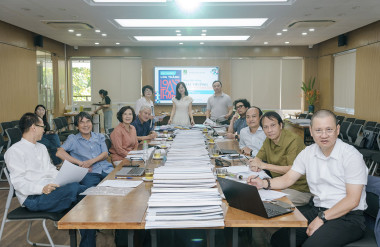
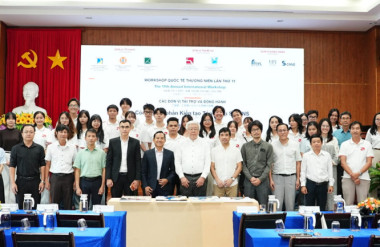
The seminar “Architectural and Planning Solutions to Minimize Damage Caused by Storms and Floods in Vietnam” was organized by the Vietnam Association of Architects on the afternoon of September 18, 2024, at 40 Tang Bat Ho, Hai Ba Trung, Hanoi. In the face of the severe damage caused by the recent storm No. 3, experts and guests had discussions on this issue, thereby providing warnings and guidance on design solutions in the project.
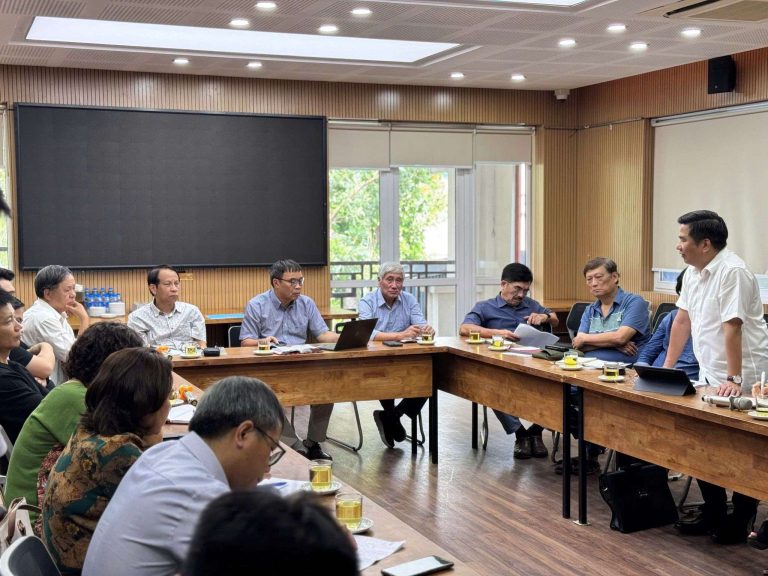
Dr. Architect Phan Dang Son – Chairman of the Vietnam Association of Architects shared his wish: “With the participation of experts in many fields and architects in many localities across the country, the Seminar will bring diverse perspectives on the shortcomings of architecture and planning in responding to natural disasters, storms and floods, thereby providing practical proposals, especially in our field of architecture.”
With that wish, the discussion received many opinions from experts and managers from the central to local levels, which are real stories in the provinces and cities that have just suffered heavy damage in the recent floods – Lao Cai, Yen Bai, or perspectives from big cities like Hanoi, Hai Phong, Nha Trang; perspectives from areas that are often heavily affected by storms and floods – the Central region or unexpected scenarios when facing storms and floods in cities known for their favorable natural conditions like Ho Chi Minh City.
From a practical perspective – What is the cause of these damages?
Architect To Ngoc Lien – Chairman of Sapa Town – Chairman of Lao Cai Architects Association expressed: “For a long time, Lao Cai has not experienced such a big flood, the Red River and the Chay River also rose to unprecedented levels. The storm was strong, the amount of rain and the duration of rain led to a series of landslides and floods in many localities. Particularly on national and provincial highways, many areas are still impassable. Therefore, it can be seen that the circulation of storm No. 3 has caused severe damage to Lao Cai. In fact, our standards and design regulations on stormwater drainage are only based on the previous level, without anticipating the levels that have exceeded, causing uncontrollable consequences. Even more difficult for Lao Cai province is the issue of housing in mountainous areas, most of which are low-rise buildings, and located along rivers and streams. According to the customs and habits of the people, the construction is based on the mountain, overlooking the river, but currently, the mountain tops are weathered, causing landslides, flash floods, causing heavy damage to people and property. Solutions to deal with natural disasters of the people on the mountains are always very difficult, costly, requiring redistribution of population, as well as many other issues. Currently, the Lao Cai Architects Association is researching the area to rebuild spaces for residents of Nu village, but the geological problem of Lao Cai is very special, with the surrounding characteristics of fields, there will also be many risks, not ensuring that area over time. Recently, Lao Cai has about 103 areas at risk of landslides. Lao Cai province is also inviting geological experts to re-evaluate the terrain, to resettle the people. However, the province also wants to hear more opinions from experts in architecture and planning on this issue. We hope that the discussion will bring us more suggestions for the province.”
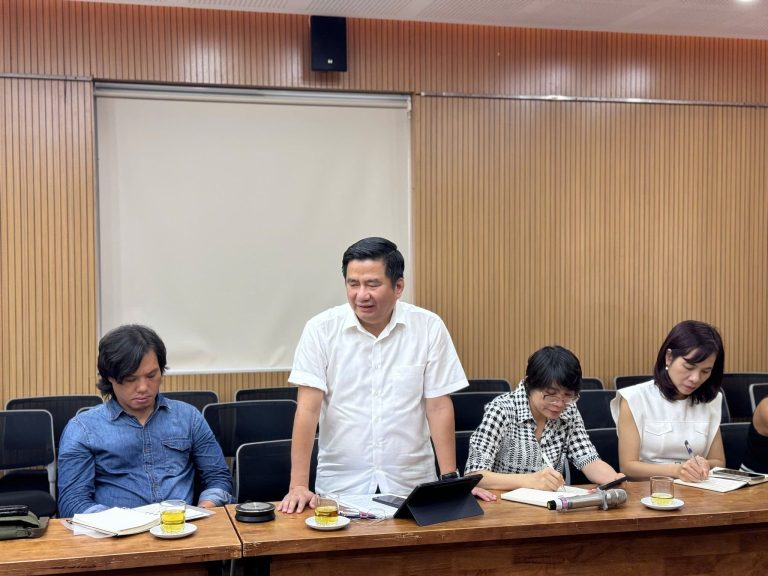
Also from a province that suffered heavy damage in the recent flood, Architect Dao Trong Thuan – Chairman of the Yen Bai Architects Association shared: “The first thing when talking about the reason why Yen Bai suffered heavy damage in the recent storm is due to the rapid urbanization rate, which led to a lack of proper calculations on drainage, causing flooding. In particular, in the recent flood, Yen Bai encountered landslides, due to the terrain characteristics and the habit of living in the forest of the people, causing a great impact, this is also an issue that needs attention when researching houses in mountainous areas or in assessing natural forest resources, it is necessary to set standards for proper implementation.”
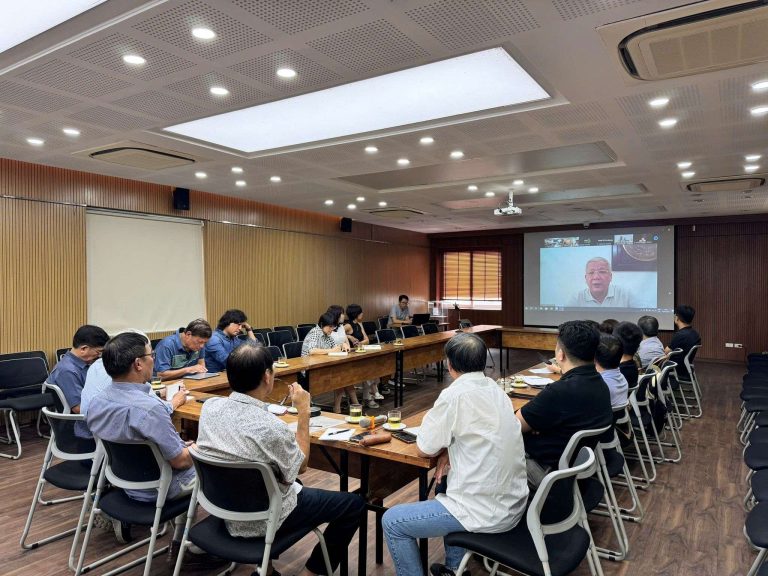
Discussing these damages, Architect Vo Quoc Thai – Chairman of the Hai Phong Architects Association also said: “Recently, Hai Phong also suffered great damage caused by storms and floods, mainly due to subjectivity when rarely encountering such storms and floods, so Hai Phong did not have a suitable response plan for storm No. 3. Hai Phong has many large projects, after many years of not being maintained, the roofs were blown off after the storm. The green tree system of Hai Phong also has no planning, mainly planting agricultural trees such as jackfruit and royal poinciana, which has led to trees falling, obstructing traffic and causing danger. In addition, Hai Phong city has a low-lying area, although it has been repaired, it is still flooded, because the drainage system is not feasible. Urban areas have been built a lot, overloading the reservoir system. The billboards are mostly spontaneous, not paying attention to the structure, so they fall a lot.”
Standards and regulations in design and construction
According to Architect Nguyen Van Tat: “In responding to natural disasters, both in terms of urban management and planning design consulting, we have been too subjective. The 1997 storm, the storm in the South, caused extremely serious damage, because at that time, the South was very subjective when it had not encountered such a big storm. The North was the same. We were too subjective and lax when approving projects in this area. Or specifically, the group of houses in the Lao Cai and Yen Bai areas located on the mountains is an issue that should not be in the design. This is an issue that we need to change when resettling. Responding to climate change must pay attention to the geological and topographical characteristics of the area and follow them, not consider it a disadvantage and fight against it. Another thing that is within the reach of architects is that in terms of architecture, we need to pay more attention to the terrain and structure to suit the natural environment of that area”.
Architect Nguyen Truong Luu, Chairman of the Ho Chi Minh City Architects Association, emphasized: “Currently, Vietnam is using the same standards and regulations for all regions, from stormy to stormy areas, from cities to plains and mountains. This is not appropriate. Construction agencies need to study this issue again, otherwise, our storm and flood problems will continue to occur.”
Architect Doan Minh Khoi: “I value local knowledge, this will be the key factor in providing design solutions. Areas that suffer from many natural disasters should also have specific guidelines on design standards so that people can understand and have designs suitable for their area.”
Architect Vo Quoc Thai – Chairman of the Hai Phong Architects Association: “I think that urban to rural construction planning and construction licensing according to construction level need to be specific and clear about construction materials, to ensure quality and safety. Construction quality should also be reviewed, as Hai Phong had to evacuate people in 2 5-storey buildings to avoid the storm. Regulations on construction warranty and maintenance should also be regulated, at the same time, aluminum and glass constructions also need to be inspected regularly to ensure construction quality. Recently, the Hai Phong Department of Construction promptly sent an official dispatch calling on organizations and individuals in the field of design consulting and construction quality appraisal to join in contributing, providing materials, and repairing constructions affected by the recent storm.”
Urban Trees
After every storm, fallen trees or broken branches seem to have become familiar.
Architect Nguyen Truong Luu shared: “In 2017, I witnessed a big storm hit Nha Trang. The strong winds of the storm knocked down many large trees, causing damage to people’s lives even before it officially made landfall. It can be seen that the issue of planting trees in Vietnam needs to be re-studied. Recently, Ho Chi Minh City inspected and cut down and replanted trees, but we replanted the same type of tree, in the exact location where that type of tree should be replaced. We also have too many old trees in Vietnam. In the world, there are no old trees like Vietnam, but only medium-sized old trees.”
Prof. Dr. Architect Nguyen Quoc Thong also shares the same opinion: “The risk of trees falling in urban areas is very high, this is an opportunity for us to review it. The solution of planting trees is also a solution to reduce wind force, we should also find a way, this is also a popular solution in the world as well as the solution according to our ancestors.” He also believes that to solve this problem, we need to think about the long-term story. “When the city cannot be drained, the city cannot be balanced, then it is right that the city will not survive. That is the problem we need to think about, otherwise all our solutions are only temporary solutions. The city really needs reserve land, but currently our city does not have it.”
The issue of green trees in the city also received the agreement of architects La Thi Kim Ngan and Dang Kim Khoi. In addition to the issue of green trees, the use of materials suitable for natural characteristics also received much attention. ThS. Architect Vu Hong Thuy said: “The structures that collapsed in storms are mainly temporary structures, structures with detachable structures (such as stilt houses placed only on the ground) or parts of structures that are connected to the main structure, such as awnings, sloping roofs, billboards that protrude too large from the structure, independent billboards that are too large, water tanks on the roof, heat-resistant corrugated iron roofs; Solid structures but the connections are aging, the endurance is reduced over time… Local construction management agencies need to be aware of the potential risks from corrugated iron roofs and weak walls that are built improperly, spontaneously, without anyone taking responsibility as is currently the case. On that basis, strictly evaluate and inspect the construction of these parts of the structure.”
According to Architect Nguyen Tuan Anh: “In my opinion, we should focus on proposing to improve design standards and regulations within the scope of the Vietnam Association of Architects’ intervention, so that these issues can be handled promptly, avoiding future damage and risks.”
Concluding the discussion, Dr. Architect Phan Dang Son, President of the Vietnam Association of Architects, thanked the valuable exchanges, raising issues of architecture and planning in the recent past. “The opinions of experts can be summarized into very useful opinions. The State should participate, and the material manufacturers have made their justifications. The Association’s Office will summarize these issues to send to the Association’s Council of Experts, to get timely opinions on this issue.”
© Vietnam Architecture Magazine