Universal Design is a design that aims to create products, services and environments that can be used by everyone, including people with disabilities and people with special needs, as easily and effectively as possible. Universal design in the planning of streetscape spaces refers to the requirements for facilities and pedestrians to meet and increase accessibility for as many people as possible using street spaces. Universal Design is fully and widely applied in the design of specialized street spaces in developed countries. The experience of applying the principles of Universal Design to design “Specialized Street” in some countries is a valuable lesson to improve the design environment of specialized streets in Ho Chi Minh City to eliminate barriers. In the future, it is necessary to integrate universal design with urban design to increase accessibility, safety and adaptability for users. New standards and guidelines based on the principles of universal design can be proposed for streetscape designs in Vietnam.


The concept of Universal design and an overview of accessibility and safety in “Specialized street” spaces in Ho Chi Minh City
The origins of Universal Design began with the barrier-free design movement at the federal level in the 1950s in the United States, followed by the vibrant civil rights movement of the 1960s. The civil rights movement inspired the disability rights movement, which created new laws in the 1970s, 80s and 90s designed to protect people with disabilities from discrimination in many areas. During this time, Universal Design was defined by Ron Mace, founder of the Center for Universal Design at North Carolina State University, as “The design of products and environments that can be used by everyone to the greatest extent possible without the need for adaptation or specialized design.” This design approach has been made available to designers through the creation of a set of principles of Universal Design. Additionally, Universal Design was conceived as an approach to integrating accessibility features into all products and more fully into the physical environment [1].
The seven principles of universal design, developed by the Center for Universal Design at North Carolina State University, with a group of inclusive design researchers and practitioners from across the United States, are [2]:
- Principle 1: Equitable Design – Design is useful and accessible to people with diverse abilities.
- Principle 2: Flexibility in Use – Design is appropriate for a wide range of individual preferences and abilities.
- Principle 3: Simple and Intuitive – Design is easy to understand and use, regardless of the user’s experience, knowledge, language skills, or current level of attention.
- Principle 4: Perceptible Information – Design effectively communicates needed information to users, regardless of the user’s surrounding environment or sensory capabilities.
- Principle 5: Tolerance for Error – Design minimizes hazards and adverse consequences of unintentional or unintended actions.
- Principle 6: Low Physical Effort – The design can be used efficiently, comfortably and with minimal fatigue.
- Principle 7: Size and space for access and use – Adequate size and space are provided for access, reaching, manipulation and use regardless of the user’s body size, posture or mobility.
Specialized Street is a term that refers to a street as part of the built environment, designed according to a theme to respond to the characteristics of the district/county or area within the framework of urban development [3]. According to that term, the main points of the specialized streetscape are:
- The element of urban development process;
- Response to local character;
- Theme;
- Part of the streetscape.
The street plays an important role as an open public space (OPS) and becomes the most influential symbol of the public realm. The street has the functional, social and recreational needs of people associated with economic growth, human physical health and sense of community. Scholars propose the idea of considering the street as a social space instead of just a road for movement [4], [5]. Based on the above terms, a specialized street is a streetscape designed according to a theme or based on local characteristics, which is part of the urban development process with certain functions. The terms streetscape and specialized street are explained as similar objects. However, specialized streets have more details than urban streetscapes [6].
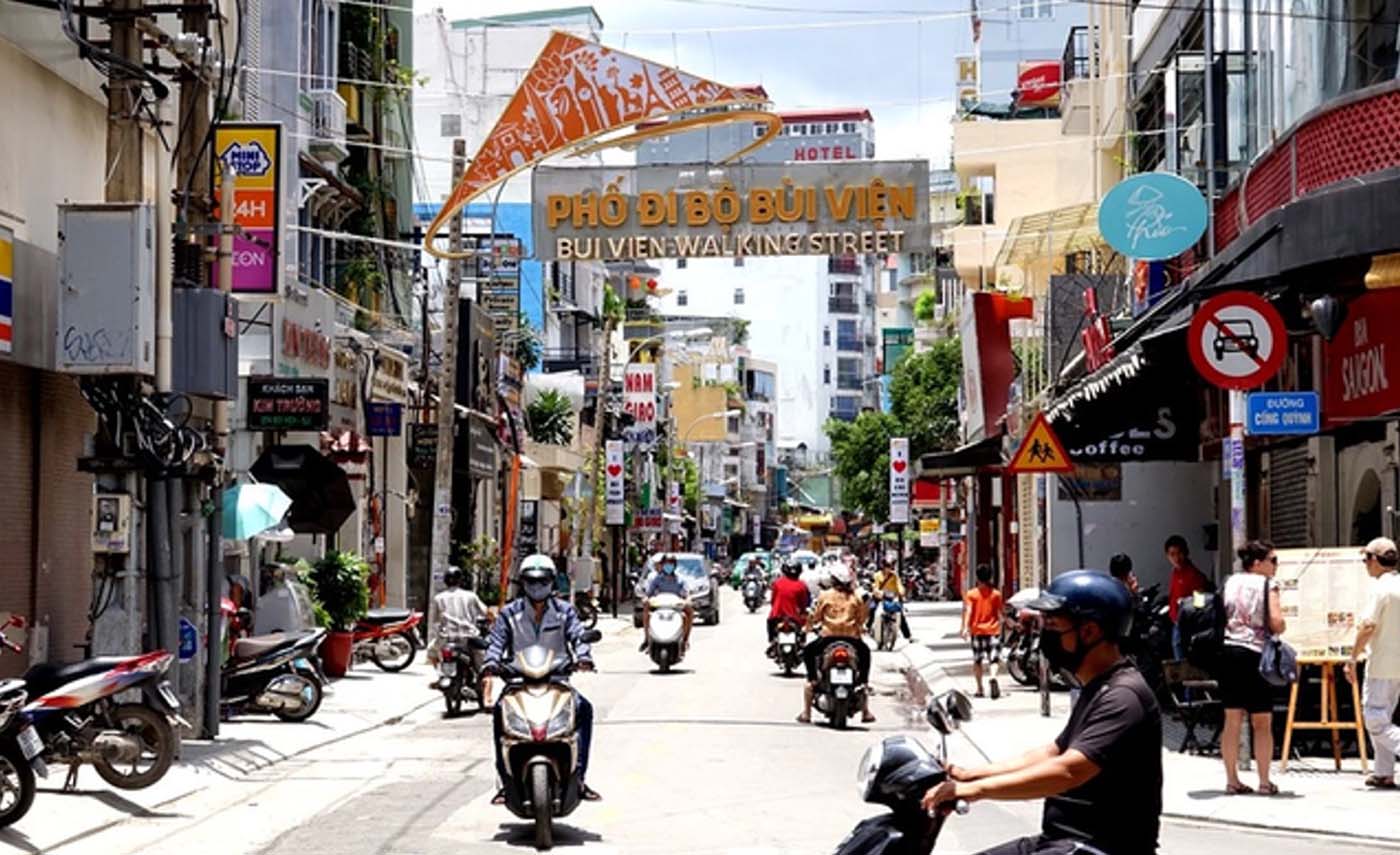
According to statistics from the Department of Social Protection, Ministry of Labor – Invalids and Social Affairs, Ho Chi Minh City currently has more than 62 thousand people with disabilities, who often encounter many obstacles in using public facilities and public utilities on specialized streets such as Nguyen Hue and Bui Vien walking streets (District 1), Nguyen Thuong Hien Food Street (District 3), and Quang Trung Monument Night Walking Street (District 10). The current state of specialized streets is still messy and not friendly to pedestrians. Incomplete traffic infrastructure, lack of public facilities, parking lots, public utilities and equipment to support people with disabilities are the causes of many limitations to the accessibility and safety of users. In addition, the cultural space typical of “Specialized Street” types in Ho Chi Minh City has not helped users to perceive and understand more about the value of the place.


Experience in applying the principles of universal design in the design of “Specialized street” in some countries
In developed countries, there are many people with disabilities participating in specialized streets because they feel comfortable living in public places. The principles of General Design are applied in most popular types of specialized streets such as pedestrian streets, commercial streets, cultural streets, monument streets, culinary streets, etc. Moreover, functional items in specialized streets such as Parking lots; Bus/subway stations; Street furniture; Street utilities; Signage; Street materials; Walking space; Linkage design… are fully built and installed to serve everyone, helping to increase safety and access with low physical effort.
The experience of designing “Specialized Streets” in some cities in Korea and Japan shows many advantages when applying the 7 principles of General Design to all facilities of a specialized street, specifically as follows:
- Gwanghwamun Cultural Street in Korea with the installation of neat and consistent street furniture, helps users to access easily and minimizes hazards for the visually impaired. The straight and visible connecting axis provides a strong cultural street identity and makes it easy for passengers to choose the route. Gwanghwamun Cultural Street is the most highly regarded in applying the general design principles for specialized streets in Korea and is the iconic main street in front of Gyeongbok Palace [3]. Multilingual signage makes it easier for locals and foreigners to recognize information and find their way.

Signs on Gwanghwamun Cultural Street provide material and transportation support for people with disabilities 
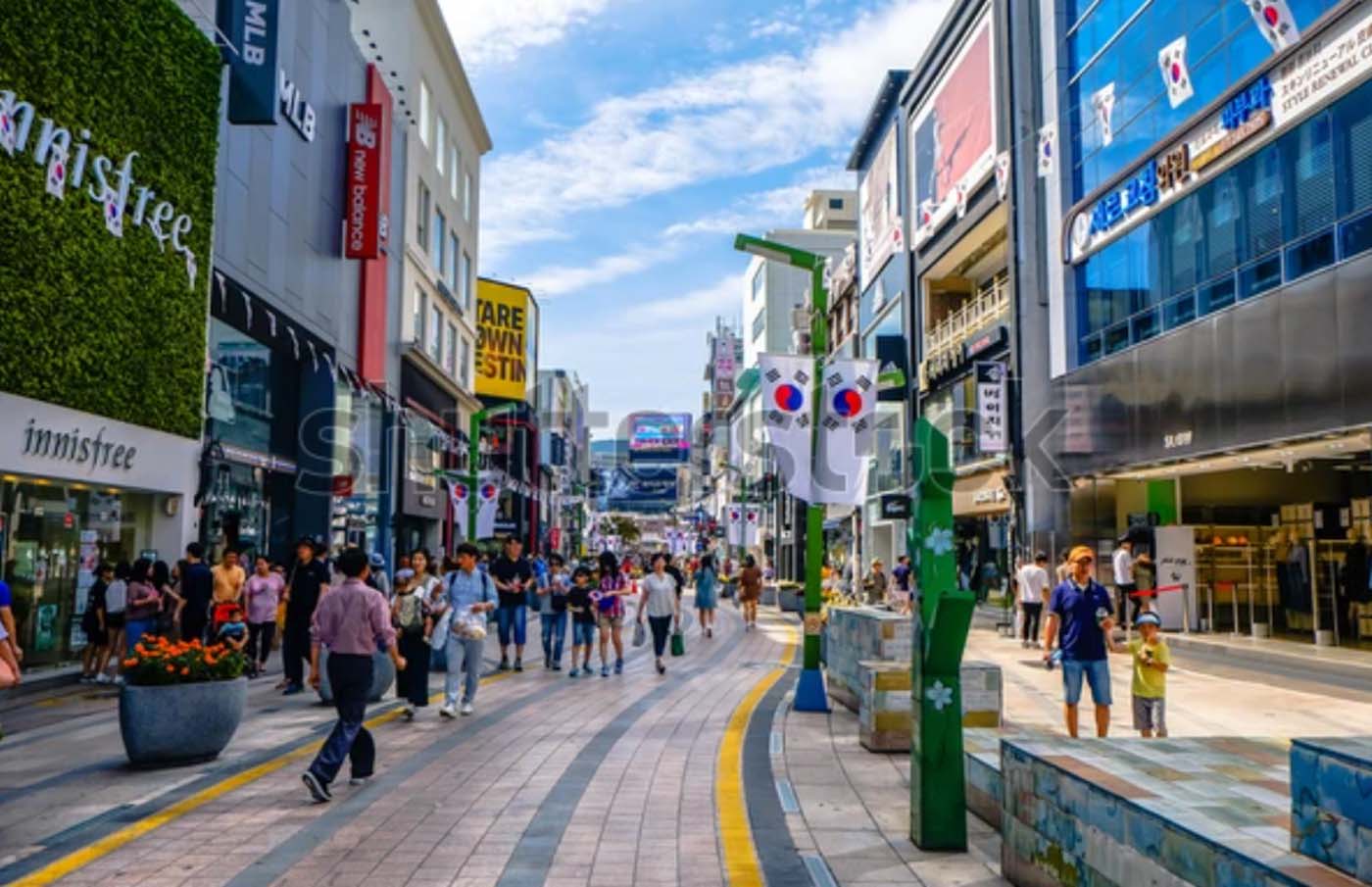
Flexible traffic divider – Design and transportation support at Nampodong Specialized Street, Busan, South Korea. - Nampodong Service Street in Korea is designed to focus on the theme of shopping related to pedestrian activities and needs, such as: Wide pedestrian paths, low-barrier roads, installation of Braille codes, and space for shopping stalls on the road. In addition, traffic separation has been enhanced for the pedestrian area and shows flexibility in use. Plant pots with a height similar to 70cm public seating show the interchangeable function as a resting place. On the other side, fixed plant islands and public art islands with a height of 50cm are not comfortable as seating areas but provide safety with visual barriers and shade. The consistent width and materials for pedestrians have created comfort for passengers in choosing routes.

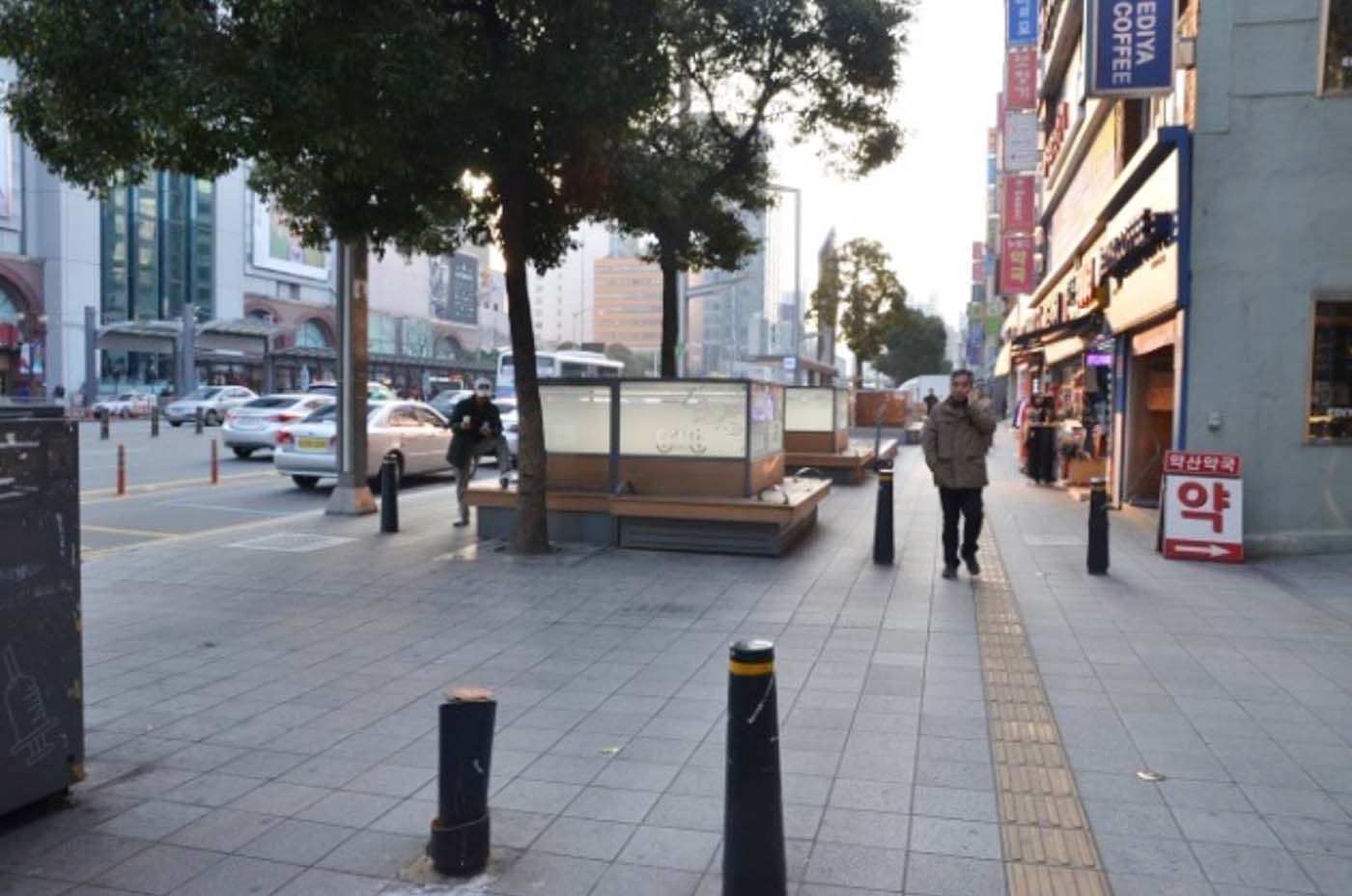
Using tactile paving for orientation on Seomyeon Cultural Street. 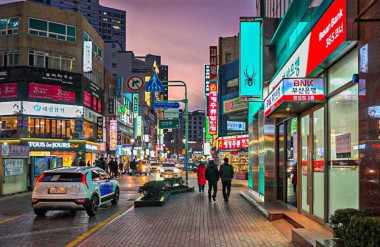
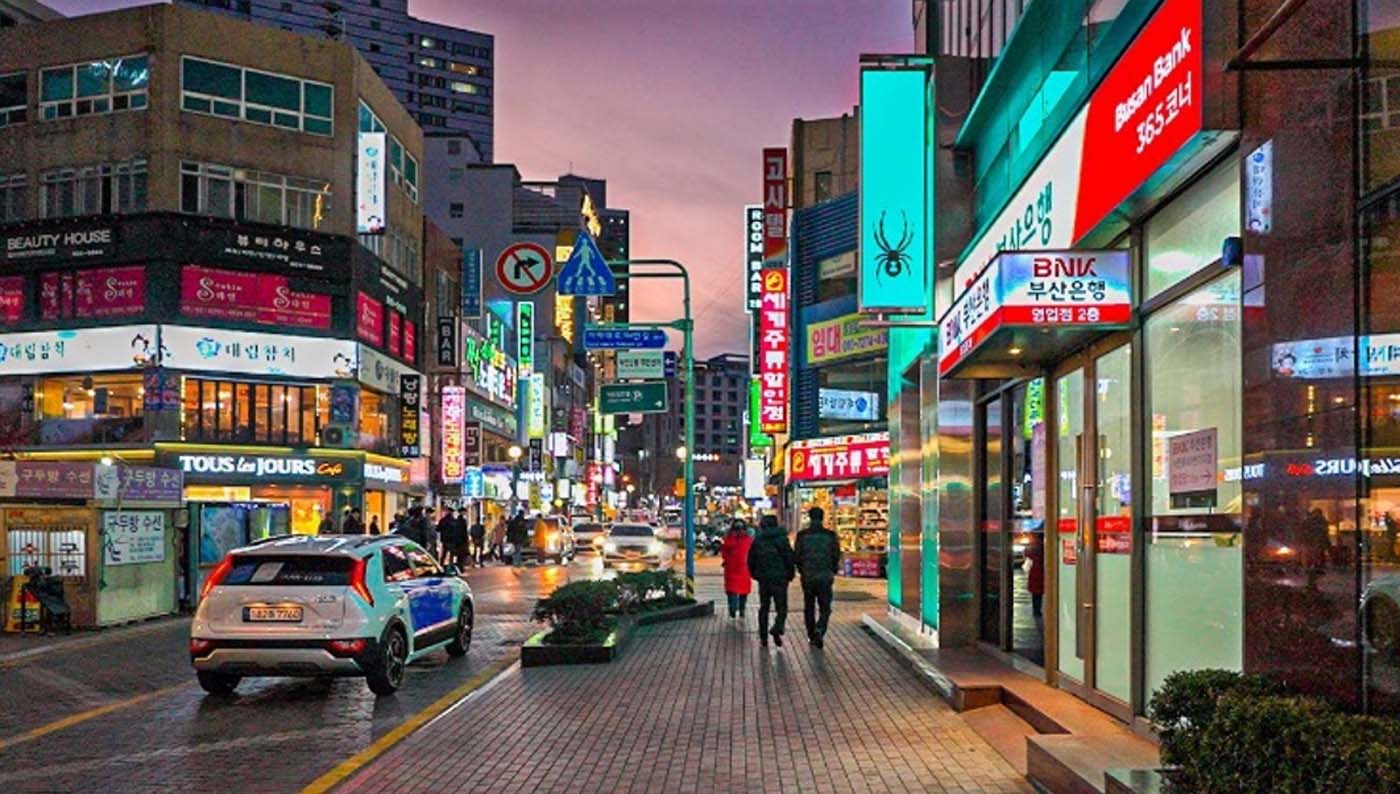
Clear separation materials between pathways on Seomyeon Cultural Street. - Seomyeon Cultural Street in Busan City uses straight tactile for people with disabilities as a priority design. The size of the street furniture is designed to accommodate the accessibility of the elderly. The mixed curb divider has been well installed for pedestrians with low physical effort, although the improper installation of tactile sensors in some locations may hinder the accessibility of visually impaired passengers. The installation of lamp posts every 20m provides good illumination, but the intensity is too weak compared to the street width and the lack of a special lighting system to detect pedestrian paths may reduce the security and safety aspect for passengers accessing. The variety of street materials and the use of different colors have made it difficult for passengers with poor memory and visual impairment to find their way around this area (Figure 9). In addition, Seomyeon Cultural Street was built to support the new downtown area of Busan and took the street theme name Insadong for cultural and artistic events.
The above design experiences show that specialized streets have successfully applied the principles of general design, meeting almost all necessary items to help people with disabilities, the elderly, pregnant women and normal people have almost equal access. In addition, each specialized street in Korea always has its own theme and identity, expressing the character of the place, making it easy for users to remember and identify.
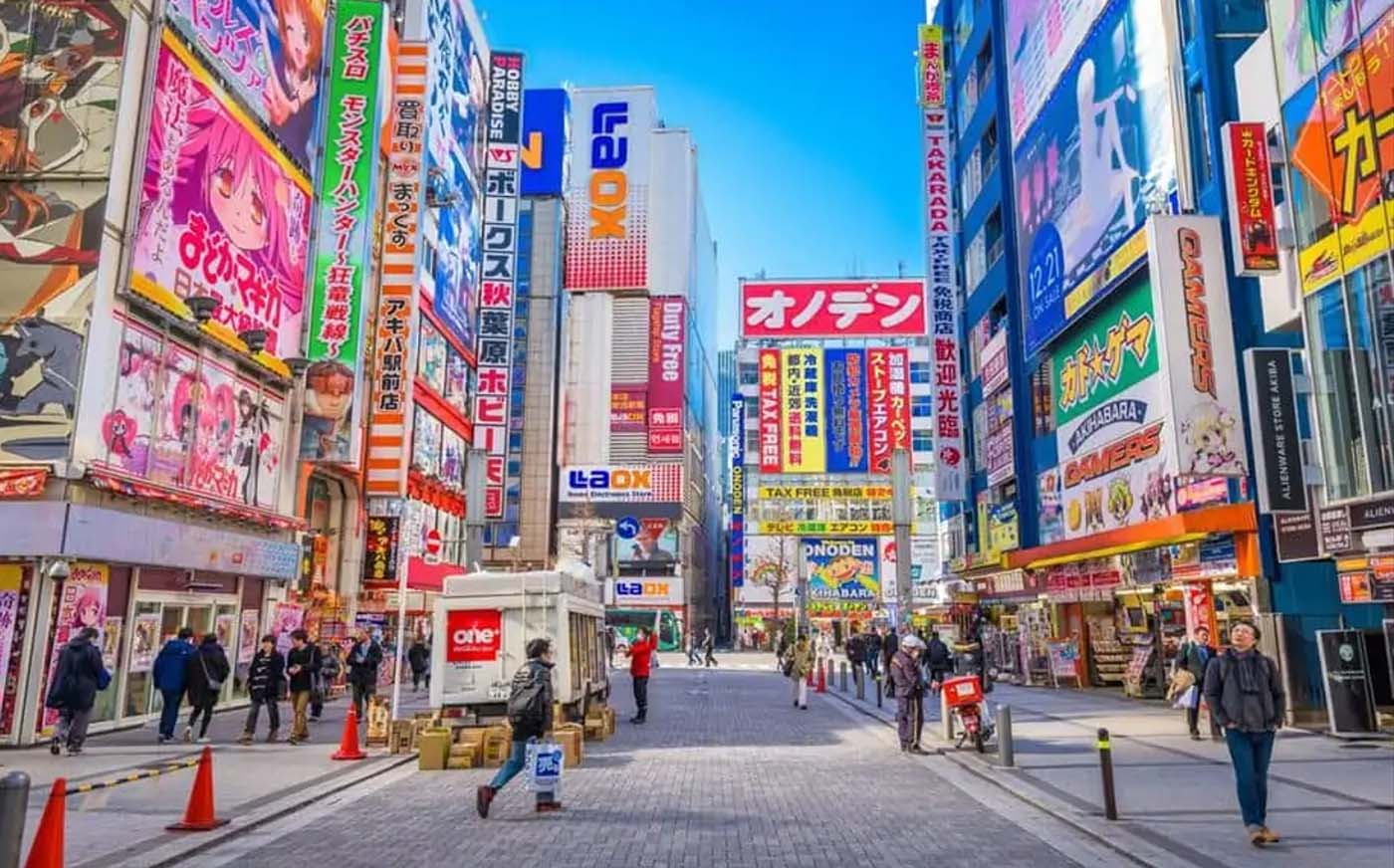
The e-commerce street in Akihabara district, Tokyo has low barriers – Design focused on pedestrians with limited use of materials. 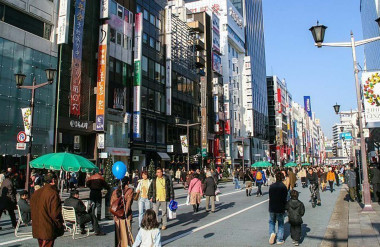
Chuo Dori, the commercial and entertainment street, is closed to cars on weekend afternoons in Ginza, Tokyo, Japan - Tokyo, Japan, is one of the world’s largest cities, with many dedicated pedestrian-friendly streets, making it one of the most walkable cities on the planet. In most districts of Tokyo, dedicated streets are fully equipped with street facilities, especially sidewalks that slope slightly down from the road surface as they approach intersections. In general, the attention and application of general design principles into the streetscape design is comprehensive and reasonable, helping to improve accessibility and comfort for users. A typical example is the electronic commercial street in Akihabara district – Tokyo, showing the orderly arrangement of lanes and other street furniture such as trash cans and local public art. That makes this pedestrian street open and simple for the elderly and disabled. At night, the neon lights of the brands on the electronic street express the identity of the area (Figure 10). Meanwhile, the central street of Chuo Dori (Ginza shopping district) is divided into hourly lanes on weekends to create a large pedestrian space. Different lighting sources from buildings and lamp posts provide good illumination on the dedicated street. Many pedestrian streets are fully equipped with control buttons and directional tactile tiles to support the disabled. The materials on the dedicated streets are reasonably designed to provide recognition, are non-slip, non-glare and safe for pedestrians.


In summary, using tactile, visual and audio design elements together to guide people of all abilities through the street environment. Consistent use of visible surfaces, color contrast and audible warnings will support all users, improving safety and accessibility. Inclusive design responds to the diversity of human appearance, cognitive abilities, body shapes and sizes. By designing for this diversity, dedicated streetscapes become more user-friendly, functional and sustainable.
The possibility of applying the principles of universal design in the design of “Specialized streets” in Ho Chi Minh City
Through the assessment of the facilities of some specialized streets in Korea and Japan, it shows that the similarities in all parameters and elements are suitable for the scope of urban design in Ho Chi Minh City. Moreover, the Ho Chi Minh City government has implemented the “equity plan” for people with disabilities in public facilities as well as specialized streets for many years, but the effectiveness is not high. Therefore, the possibility of applying the principles of General Design to improve the environment of specialized street spaces in Ho Chi Minh City is reasonable and feasible. Fully applying the principles of general design will improve accessibility and increase safety for users, especially people with disabilities and the elderly. At the same time, enhance the identity of each type of specialized street through local cultural aspects.
The experiences of Korea and Japan in universal design can be applied to the design of specialized streets in Ho Chi Minh City. Here are some ways to apply the principles of “Universal Design” to the design of “Specialized Street” in Ho Chi Minh City such as:
- Classify areas and services: Divide areas and services on the street according to specific user groups or purposes. For example, there can be areas for people with disabilities, areas for the elderly, areas for children, areas for pedestrians, and areas for people moving in wheelchairs.
- Ensure facilities for everyone: Design with people as the center, providing services and facilities on the street that everyone can use. For example, ensure there are seats for the elderly and people with disabilities, lighting systems that are bright enough for the visually impaired to move safely at night, and spacious parking for wheelchairs and bicycles.
- Pedestrian-friendly street design: Create wide, smooth and barrier-free walkways for pedestrians, especially people with disabilities, to move easily. Provide adequate audio guidance and wayfinding to support people with visual impairments to participate in social activities, and access public spaces;
- Optimize the location and design of facilities: Ensure facilities such as shops, restaurants and toilets are conveniently located and designed to accommodate everyone. For example, provide landscaping and open spaces to create open and comfortable spaces for everyone;
- Improve public transport and transport accessibility: Ensure public transport and personal transport are accessible to everyone, including people with disabilities and older people. This may include improving access to public transport and providing personal transport services such as taxis and wheelchairs.
- By fully applying the principles of universal design, “Specialized Street” in Ho Chi Minh City can become a diverse and friendly environment for everyone, creating favorable conditions for everyone to participate and use in the easiest and most comfortable way in the future.
Conclusion
In the future, it is necessary to integrate universal design with urban design to increase support, accessibility, safety and visibility. New standards and guidelines based on universal design can be proposed for streetscape designs in Ho Chi Minh City. The guidelines should be applied from urban intersections, then to the street itself and end at the destination. Furthermore, the 7 principles of universal design should be applied more widely and fully to the facilities of dedicated streets, specifically:
- Parking locations: Must be provided for all passengers and people with disabilities. At the same time, all passengers must be able to open the doors fully to get on or off the vehicle and move from the dedicated street to the parking lot without much effort;
- Easy access to bus stops/metro station entrances from the dedicated streets. Provide clear and easy-to-find information for users;
- Street furniture and amenities: Use uniform, simple and local characteristics. Maps, handrails and public amenities are fully and reasonably equipped to increase the ability to find information in the area.
- In addition, the installation of permanent public art provides landmarks on the area to help users easily identify the location;
- Visual directional signs: Such as audio and tactile signs, must be provided on the dedicated streets to facilitate the disabled when finding information in the area;
- Street materials: Non-slip, non-glare will be safe for pedestrians. In addition, the appropriate location of tactile materials will easily connect and guide people with disabilities. Using soft materials such as rubber tiles for continuous walkways will be better and pedestrian signs need to be installed reasonably;
- Walking space: Each type of specialized street has different themes, depending on the function and walking space of the street. Design spaces that are easy to recognize and have emergency exits;
- Connection design: Vertical connection traffic such as ramps, elevators, stairs need to be designed according to standards and appropriate locations, creating conditions for people with disabilities to connect conveniently and flexibly. Integrate technology and smart devices to support people with disabilities in participating in events and connecting activities.
Each specialized street must have its own theme and identity, maintain and link with other parts of the urban area to make it easy for residents and visitors to remember the place. Therefore, adding urban identity elements to the design of public spaces on specialized streets in Ho Chi Minh City is really necessary.
Dr. Arch Vo Hoang Khanh
Ton Đuc Thang University
© Vietnam Architecture Magazine
References
[1]. Ronald Mace, architect, founder and programme director of The Centre for Universal Design Preiser, Wolfgang F E [2001], Universal Design Handbook, McGraw-Hill, New York;
[2]. Principles of Universal Design, http://universaldesign.ie/What-is-Universal-Design/The-7-Principles/ (Accessed on 10 February 2020);
[3]. Bangun Indrakusumo R.H. (2016), Design Characteristics of Specialized Streets for Indonesia through Cases of South Korea – A dissertation submitted in partial fulfillment of the requirements for the degree of Doctor of Philosophy in Department of Architectural Engineering – The Graduate School Pukyong National University;
[4]. V. Meht, Lively Streets: Exploring The Relationship Between Built Environment And Social Behavior (2006);
[5]. Department of transport (2007) Manual for Street, Thomas Telford, London;
[6]. Otak Team (2008) Scottsdale Road Streetscape Design Guidelines, city of Scottsdale: Arizona;
[7]. Q. Huy, Hải Long, Trần Đạt, P.N. (2023), Hàng loạt Khu phố đi bộ có giúp TP. HCM phô diễn bản sắc? – Dân trí 12/04/2023;
[8]. https://www.koreatodo.com/gwanghwamun-square;
[9].https://www.shutterstock.com/vi/image-photo/busan-south-korea-august-2017-nampodong-704781628;
[10].https://www.koreaherald.com/view.php?ud=20200927000163;
[11]. Null, Roberta (2014) Universal design Principles and Models, Taylor & Francis Group;
[12]. Shehu, Vjosa (2011) Universal Design Strategies On Developing Country, Case Study: Tirana, Master’s thesis, Eposka University Tirana, Albania;
[13]. Rihan, Reeman (2013) Sustainable Streetscape As An Effective Tool In Sustainable Urban Design, HBRC Journal (2013) 9, p173-186;
[14]. Rawiwan, Oranratmanee et all (2014) Streets as Public Spaces in Southeast Asia: Case Studies of Thai Pedestrian Streets, Journal of Urban Design, 19:2, p211-229;
[15]. North Caroline State University, College of Design (1997). The Center For Universal Design, Retrieved 21 May 2010 from http://www.design.ncsu.edu/cud;
[16]. Leden, Lars (2006) Safe Pedestrian Crossings For Children And Elderly, Accident Analysis and Prevention 38: p289–294;
[17]. Aslaksen (1997) Universal design: Planning and Design for All, Cornel University (http://digitalcommons.ilr.cornell.edu/gladnetcollect);
[18]. Burton, Elizabeth; Lynee, Mitchell (2006) Inclusive Urban Design: Street for Life, Elsevier Linacre House, Jordan Hill, Oxford;
[19]. Einar Lillebye (1996) Architectural And Functional Relationships In Street Planning: A Historical View, Landscape, and Urban Planning 3 : 85-105;
[20]. https://www.sociale.it/2016/02/23/universal-design-significato-e-origine-del-termine/;
[21]. https://nacto.org/publication/transit-street-design-guide/stations-stops/stop-design-factors/universal-design-elements/